
The 9 Lies Golfers Tell Themselves
Golfers are honest people… until the topic is their own golf game. Then suddenly we all become part‑time storytellers, part‑time statisticians, and full‑time excuse machines. The good news? The data doesn’t judge – it just tells the truth. And when you understand the truth, your scores drop.
Below are the nine biggest lies golfers tell themselves, the data that exposes them, and how embracing reality can help you finally lower your handicap.
Lie #1: “I hit my driver 275… on average.”
Every golfer has that one drive they remember – the downhill, downwind, cart‑path‑assisted bomb that rolled forever. But that’s not your average.
Shot‑tracking data shows the typical amateur male carries the driver 200–215 yards, and women average 140–170 yards.
Why the truth helps: When you know your real distance, you choose smarter targets, avoid forced carries you can’t make, and stop leaving yourself impossible approach shots.

Helpful gear: A personal launch monitor like the Swing Caddie Portable Launch Monitor gives real numbers.
This post contains affiliate links. If you use these links to buy something, I may earn a commission at no extra cost to you. Thanks for your support!
Lie #2: “I’m a good putter – I just don’t make anything.”

If you’re not making putts, you’re not a good putter.
And here’s the data: even great putters don’t make much.
- From 10 feet, PGA Tour pros make 38%.
- From 20 feet, they make 15%.
Why the truth helps: You stop chasing miracle putts and start focusing on what actually lowers scores: speed control and eliminating three‑putts.
Lie #3: “I always miss left.”
No, you don’t. You remember the left misses because they annoy you. But your dispersion pattern is wider than you think.
Most amateurs miss both directions, and often the “big miss” is the one they emotionally attach to.
Why the truth helps: Understanding your actual pattern helps you aim correctly, choose safer targets, and stop trying to fix a problem that isn’t your real problem.
Lie #4: “I need to hit the ball higher.”
Most amateurs already hit the ball too high – or more accurately, with too much spin and not enough ball speed.
The result? Ballooning shots that look high but don’t go anywhere.
Why the truth helps: Instead of chasing height, you start chasing solid contact, which is the real distance multiplier.
Helpful gear: The classic Impact Bag helps with centered strikes.
Lie #5: “I don’t need a lesson, I just need more reps.”
Repetition only helps if you’re repeating the right thing. Otherwise, you’re just getting better at your bad habits.
Golfers who take lessons improve 3–5× faster than those who don’t.
Why the truth helps: You stop grinding on the range and start practicing with purpose – drills, feedback, and structure.
Lie #6: “I play better when I don’t think.”

This is a comforting lie, but the truth is more nuanced. You don’t play better when you don’t think, you play better when you think about the right things.
Great players think about:
- Target
- Shot shape
- Wind
- Lie
- Landing area
- Club selection
What they don’t think about is their backswing.
Why the truth helps: You build a simple, repeatable pre‑shot routine that keeps your brain focused on strategy, not mechanics.
Lie #7: “I’m just unlucky.”
Bad bounces happen. But over 18 holes, luck evens out. What doesn’t even out is poor decision‑making.
Most amateurs lose 3–7 shots per round from avoidable mistakes:
- Hero shots from the trees
- Aiming at flags they shouldn’t
- Choosing the wrong club
- Ignoring wind
- Taking unnecessary risks
Why the truth helps: You start playing golf, not golf swing. And that’s where handicaps drop the fastest.
Lie #8: “I should play from the tips – that’s real golf.”
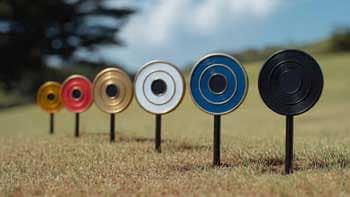
Many golfers treat the back tees like a badge of honor. But the truth? Most amateurs have no business playing from 7,000+ yards.
Scratch golfers typically play 6,600–6,800 yards. A 10‑handicap belongs around 6,200–6,400 yards. A 20‑handicap should be closer to 5,800–6,000 yards.
Why the truth helps: Playing the right tees means:
- More greens in regulation
- Fewer long‑iron approaches
- More playable tee shots
- Lower scores and more fun
Even Tour pros move up during practice rounds. If they don’t feel the need to “prove” anything, neither should you.
Lie #9: “It doesn’t matter what golf ball I use.”

This one quietly costs golfers more strokes than almost anything else.
Golf balls vary dramatically in spin, compression, launch, and feel – and switching balls every round is like changing equipment without realizing it.
The data says:
- Low‑compression balls add 5–12 yards for slower swing speeds
- High‑spin balls can cost mid‑handicappers 2–4 strokes
- Consistent ball choice improves wedge distance control
Why the truth helps: Playing the same ball every round gives you:
- Predictable spin
- Better distance control
- Fewer big misses
- More confidence around the greens
If you want a premium‑performance ball without the premium price, the TaylorMade Tour Response is a standout choice for mid-handicappers – and yes, it comes in your favorite Pink Stripe version
Ready to Finally Play the Golf You’re Capable Of?

If you want a data‑driven roadmap for lower scores, get your personalized Golf Course Intel Strategy Guide.
Your guide includes:
- Personalized drills based on your swing tendencies
- Stretches and warmups tailored to your body
- The perfect golf ball and club recommendations for your game
- A hole‑by‑hole, shot‑by‑shot course‑management framework for any course in the world
- A clear plan to lower your handicap without rebuilding your swing
It’s the fastest way to turn truth into progress – and progress into lower scores.





)
0 Comments