
Stop Playing the Wrong Tees and Lower Your Handicap Today
So there’s the group on the first tee box, waiting for the fairway to clear 280 yards away, only to top their drives 150 yards into the rough. It’s a scene that plays out on courses every weekend, and it’s a symptom of a massive problem in recreational golf: the ego-driven decision to play the “wrong” tees.
You might think playing the back tees – “the tips” – is a badge of honor, or is impressing your playing partners, or is a way to get your money’s worth. But the reality? It’s likely the single biggest factor destroying your scorecard, wrecking your confidence, and slowing down everyone else’s day.
If you’ve ever wondered why you’re not improving despite hours at the range, the answer might be staring you right in the face from those championship tee markers.
The Math: Finding Your “Green Light” Distance
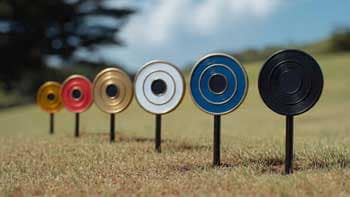
The most common reason golfers play too far back is a lack of clear guidelines. Fortunately, data from the USGA and the PGA of America provides a simple framework to help you choose the tee box that matches your actual skill level.
Here’s a simple reality check that’ll tell you exactly which tees you should be playing:
1. The “Driver x 28” Rule
This is the gold standard for tee selection. Take your average total driving distance (not your one-time miracle wind-aided smash) and multiply it by 28.
This is the standard you will see in pro shops and magazines. It was designed to encourage golfers to move up tees to speed up play and make the game more enjoyable.
The “Tee It Forward“ initiative (a joint venture by the USGA & PGA of America) aligns your average driving distance with a total course yardage (e.g., 250-yard drive = 6,200–6,400 yard course).
- > 275 yards: ~7,700 yards (Tour level)
- 250 yards: 6,200 – 6,400 yards
- 225 yards: 5,800 – 6,000 yards
- 200 yards: 5,200 – 5,400 yards
- 175 yards: 4,400 – 4,600 yards
If you drive the ball 225 yards but are playing a 6,500-yard course, you are effectively playing a completely different sport than the course architect intended.
2. The “7-Iron x 46.67” Rule: The “Better” (Newer) USGA Recommendation
While the Driver Distance formula is the most famous due to the “Tee It Forward” campaign, the USGA has more recently shifted its recommendation to the 7-Iron Distance method because it is considered more reliable.
The USGA “Best Tees“ System (introduced more recently, circa 2023) is the guideline preferred now. The USGA found that most golfers overestimate their driving distance (often citing their best drive rather than their average). However, golfers are surprisingly honest and consistent about how far they hit a 7-iron. Using your 7-iron distance determines the best tees more accurately than driver distance for the vast majority of players.
The formula to determine your ideal course yardage based on your 7-iron distance is to multiply your average 7-iron carry distance by 46.67.
This specific multiplier comes from the logic that a 7-iron typically travels about 60% of the distance of a driver. If you take the gold standard “Driver × 28” rule and divide 28 by 0.60, you get approximately 46.67.
The Reference Chart (USGA “Best Tees” Guidelines)
Most golfers find it easier to use the standard bracketed chart provided by the USGA and PGA of America rather than doing the math on the first tee. Here’s the breakdown:
| Avg. 7-Iron Distance | Recommended Course Length |
| < 80 yards | 3,500 – 3,700 yards |
| 95 yards | 4,100 – 4,300 yards |
| 110 yards | 4,800 – 5,000 yards |
| 125 yards | 5,400 – 5,600 yards |
| 140 yards | 5,900 – 6,100 yards |
| 155 yards | 6,400 – 6,600 yards |
| 170+ yards | 6,700 – 6,900+ yards |
Why It Matters

Using this formula ensures that on a standard Par 4, you are hitting a drive followed by a mid-to-short iron (like a 7-iron) rather than a fairway wood or hybrid.
This increases your chances of hitting the Green in Regulation (GIR) and significantly improves pace of play.
There’s zero shame in any of these numbers. What’s shameful is stubbornly playing a distance you can’t handle and blaming your game.
The Stroke-Bleeding Effect: 100 Yards = How Many Strokes?
Here’s a stat that should make you rethink everything: studies show that playing just 100 yards too long costs the average golfer approximately 1-2 strokes per round. That might not sound like much, but multiply it out.
If you’re playing 500 yards too long (common for mid-handicappers on blue tees), you’re giving away 5-10 strokes before you even factor in skill. That’s the difference between shooting 95 and 85, or between 85 and 75.
The Compounding Effect:
- 100 yards too long = 1-2 strokes lost
- 300 yards too long = 3-6 strokes lost
- 500+ yards too long = 5-10 strokes lost
- Extra penalty strokes from difficult positions and over-swinging = 3-5 additional strokes
Move up, and suddenly that 95 you shot starts looking a lot more like the 85 you’re actually capable of – from the right tees.
Pace of Play: The Hidden Cost Nobody Talks About

When a 15-handicap golfer plays from 6,700 yards, they are essentially playing a Par 5 for every Par 4. It takes them 3 shots to reach the green instead of 2. If everyone in a foursome takes just one extra shot per hole due to excessive length, that is 72 extra shots the group has to hit over 18 holes.
Multiply that by the time it takes to find balls hit into the woods because players are over-swinging to generate power, and you have a recipe for gridlock.
A foursome playing tees that are too long can easily add 30-45 minutes to their round. That’s the difference between being welcomed back and getting the stink-eye from the starter.
Ball Loss Breakdown: Your Equipment Budget Depends on Tee Selection
Let’s talk about your wallet. Every golf ball lost is money down the drain, and playing from the wrong tees dramatically increases lost ball frequency.
Average Balls Lost Per Round by Tee Selection:
- Playing 500+ yards too long: 4-6 balls
- Playing 300 yards too long: 2-4 balls
- Playing appropriate distance: 0-2 balls
- Playing 200 yards too short: 0-1 balls
At $3-5 per ball (for decent quality like Titleist TruFeel or TaylorMade Tour Response), playing the wrong tees could cost you an extra $10-20 per round, or $500+ per year.
The Confidence and Enjoyment Factor
Golf is hard enough without making it impossible. When you’re constantly facing 200-yard approach shots instead of 150-yard shots, your brain starts associating golf with failure.
What Playing the Right Tees Does for Your Game:
- Hitting more greens in regulation builds confidence
- Shorter approach shots mean better scoring opportunities
- Successfully executing your game plan reinforces good habits
- Seeing improvement motivates more practice
- Actually enjoying yourself means you’ll play more often
Remember: Tour pros practice from 100-150 yards constantly because that’s their scoring zone. When you play the right tees, that becomes your scoring zone too.
Slope, Course Rating, and Your Handicap: The Math That Matters

Many golfers refuse to move up because they think their handicap will suffer. “I get fewer strokes from the white tees,” they argue.
While true – the Course Handicap calculation will likely give you 2 or 3 fewer strokes from the forward tees due to a lower Slope and Course Rating – the trade-off is heavily in your favor. The strokes you “lose” on paper are far fewer than the actual strokes you save by hitting shorter clubs into greens.
Scenario:
- Back Tees: You get 18 strokes. You shoot 95. Net 77.
- Forward Tees: You get 15 strokes. You shoot 85. Net 70.
The math is simple: The game is easier from forward tees than the handicap system gives it credit for.
If you’re a 15-handicap constantly shooting 92 from tees with a 72.5/135 rating, you might actually be a 12-handicap who’s playing 500 yards too long. Your handicap should reflect your ability, not your stubbornness.
Immediate Benefits of Moving Up

If you leave your ego in the parking lot and move up one set of tees next weekend, here is what will happen:
- More Pars and Birdies: You will have more wedges in your hand.
- Less Fatigue: You won’t be swinging out of your shoes on every tee.
- Faster Rounds: You’ll finish in under 4 hours.
- Better Iron Play: You will actually get to use your 8, 9, and PW for approaches.
- Course Management: You can hit 3-wood or hybrid off the tee for position rather than driver for survival.
- Honest Assessment: You’ll learn how good your short game really is (or isn’t).
Sum of All Parts
Playing the wrong tees isn’t “challenging yourself” – it’s sabotaging yourself. The game was designed to be played in the air, landing on greens, and putting for birdie.
If you’re scrambling for bogey on every hole, look at the tee markers. The solution to your game might not be on the range; it might just be 20 yards closer to the hole.
If These Articles Help,
Running Golf Course Intel takes real time, real effort, and – yep – real golf balls. If you’ve enjoyed the guides, the strategy breakdowns, or the myth‑busting articles, hitting that Buy Us Golf Balls button is the easiest way to help keep the site online and the content flowing. Every donation, big or small, genuinely fuels the next round of smarter golf insights.
Thanks for helping us keep this thing rolling!
Transform Your Entire Game with Personalized Strategy

Choosing the right tees is just the beginning of playing smarter, more strategic golf. Imagine having a complete game plan personalized specifically to your distances, tendencies, and goals.
Request your personalized Golf Course Intel Strategy Guide today. We will help you identify the perfect:
- Personalized Drills & Stretches: To get your body ready for the swing you have.
- Equipment Recommendations: Find the perfect golf ball and clubs (Driver, Woods, Irons) tailored to your swing speed.
- Course Management Framework: Learn when to attack and when to play safe – and which tees to start from.
Stop guessing and start playing golf based on your actual game, not the game you wish you had. The right tees are waiting for you. Your best golf is too.
Don’t just play golf – play smart golf.





)