
Pain-Free Golf: Strategies for Overcoming Physical Limitations at Every Age
Golf is often called the “game for a lifetime.” Ideally, we pick up a club in our youth and keep swinging well into our golden years. But as any seasoned player knows, the body you bring to the first tee at age 20 is vastly different from the one you bring at age 40, 60, or 80.
For many of us, the love of the game is constant, but the ability to execute that perfect swing is hampered by physical hurdles. Whether it’s the stiffness of a sedentary job, the wear-and-tear of arthritis, or specific physical disabilities, these limitations can be frustrating.
The good news? You don’t have to hang up your spikes. By understanding your body’s unique “hazards” and applying the right course management strategies, you can overcome physical limitations in golf and enjoy pain-free rounds.
The “Young Gun” & The Myth of Invincibility (Ages 15–29)

It might seem strange to discuss physical limitations with younger golfers, but this demographic faces a unique set of risks: overuse and hypermobility.

Because young bodies are still developing, they often have excessive flexibility without the necessary core stability to control it. This leads to the classic “reverse C” finish that puts massive strain on the lower back. Combined with the desire to smash the ball 300 yards, this is a recipe for stress fractures and early burnout.
The Strategy: Structure Over Speed
- The Swing Count: Just like a baseball pitcher has a pitch count, young golfers should limit full-speed driver swings during practice.
- Stability First: If you are naturally flexible, stop stretching! Focus on “anti-rotation” exercises like planks and dead bugs to build a braking system for your swing.
- Equipment Check: ensure clubs aren’t too heavy or long, which forces the body into unnatural compensations.
The “Desk Warrior” (Ages 30–55)

Welcome to the age of the “Weekend Warrior.” You spend 40 to 50 hours a week sitting in a chair, hunching over a keyboard, and commuting. This lifestyle creates specific physical limitations known as “Office Hips” and Thoracic Immobility.
Sitting shortens your hip flexors and turns off your glutes. When you get to the tee on Saturday morning, your hips can’t rotate, so your lower back is forced to do all the work. The result? Chronic lower back pain and the dreaded “chicken wing” swing because your upper back (thoracic spine) is locked up.
The Strategy: The “Desk-to-Tee” Protocol
- Never “Cold Start”: Do not go straight from the car to the first tee. You need a transition period.
- The Parking Lot Drill: Perform the “Standing Twist.” Hold a club across your shoulders behind your neck. Keep your hips facing forward and gently rotate your shoulders left and right. This wakes up the thoracic spine.
- Workday Micro-Breaks: Set a timer at work. Every hour, stand up and do a lunge stretch. This keeps the hip flexors from cementing into a shortened position.
- Grip Check: Stress manifests in the hands. If you have “Golfer’s Elbow,” check your grip pressure. You are likely strangling the club.
The “Seasoned Veteran” (Ages 60+)

As we enter the senior years, the battle shifts toward Arthritis, Sarcopenia (muscle loss), and joint stiffness. You have the wisdom and the course management skills, but the body simply refuses to rotate as far as it once did.
The biggest mistake senior golfers make is trying to swing like their younger selves. This leads to injury and frustration. The goal here is efficiency.
The Strategy: Adapt and Glide
- The Toe Flare: This is a game-changer. At address, flare your lead foot (left foot for righties) out 30 to 45 degrees toward the target. This simple move pre-opens the hips, allowing you to turn through the ball without straining your knees or lower back.
- Equipment Upgrades: Swallow your pride and switch to graphite shafts. They are lighter and absorb vibration, which saves your elbows and hands. Switch to “arthritic” grips, which are slightly larger and require less squeezing force.
- Mallet Putters: If vision or depth perception is fading, switch from a blade putter to a high-contrast mallet putter. The larger alignment lines make it easier to see the line.
Navigating Specific Disabilities & Injuries
Golf is one of the most inclusive sports in the world, thanks to the handicap system and adaptive technologies. Here is how to handle specific hurdles:
1. Knee & Hip Replacements
Impact and torque are the enemies here.
- The Fix: Ditch the metal or aggressive soft spikes. Switch to spikeless golf shoes. They allow a tiny amount of “slide” during the swing, which releases the rotational torque that would otherwise tear at your knees. Also, master the “Step-Through” drill: allow your trail foot to walk toward the target after impact to release pressure.
This post contains affiliate links. If you use these links to buy something, I may earn a commission at no extra cost to you. Thanks for your support!
2. Visual Impairment
- The Fix: Use high-visibility matte balls (bright yellow or red), which are easier to track against green grass and grey skies. Don’t be afraid to use a guide. Under Rule 25 (Modifications for Players with Disabilities), visually impaired golfers can have an aide stand behind them to help with alignment – something usually forbidden.
3. Neurodiversity (ADHD / Sensory Overload)
For some, the limitation isn’t physical but sensory. The loud cracks of the driver or the slow pace of play can cause anxiety or loss of focus.
- The Fix: Use noise-reducing earplugs that filter sharp noises but allow conversation. Play “Ready Golf” to keep the momentum moving and reduce the “waiting anxiety” between shots.
The Universal “First Aid” for Soreness
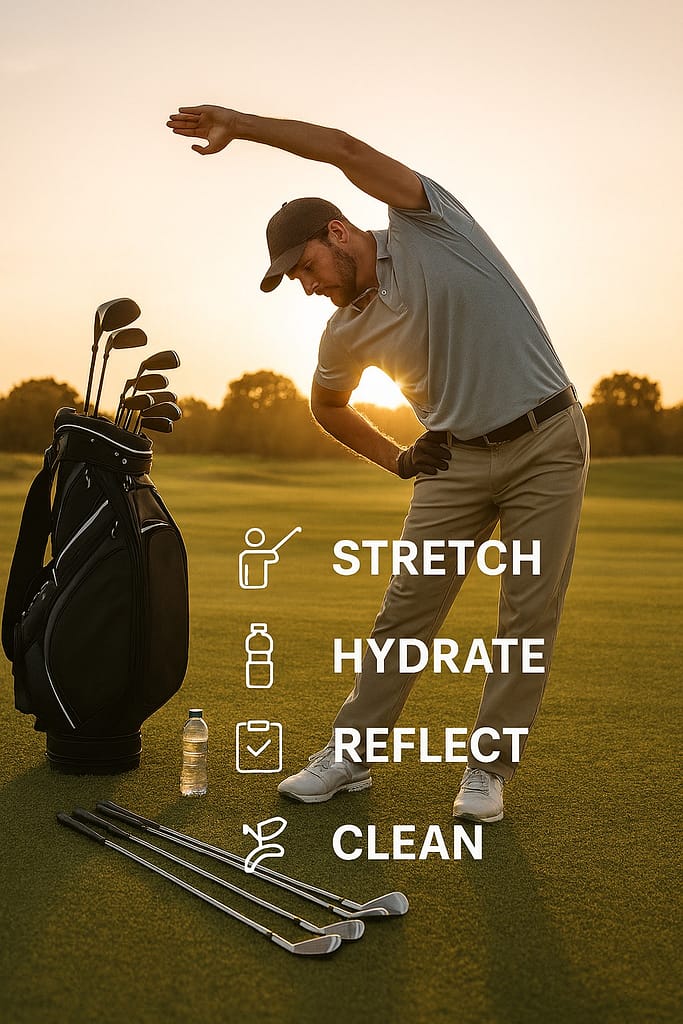
No matter your age or ability, general soreness and fatigue can ruin a round. If you find yourself dragging your feet by hole 14, you are likely suffering from electrolyte depletion or inflammation.
- Hydrate Strategically: Water isn’t enough. Drink water with electrolytes on every odd-numbered hole.
- The “Doorway Stretch”: Post-round, stand in a doorway with your arms at 90 degrees and lean forward. This stretches the pecs and undoes the “hunching” posture of the golf swing.
- Active Recovery: A 15-minute walk the day after a round is infinitely better for stiffness than sitting on the couch.
Get Your Personalized Roadmap: The Fairway Fundamentals
We have covered a lot of ground here, but the reality is that every golfer’s body is unique. A generic warm-up routine might work for a junior player, but it won’t help a senior golfer managing arthritis, nor will it fix the tight hips of a “Desk Warrior.”
You shouldn’t have to guess which movements are safe for you. You need a routine that fits your specific mechanics.
Stop playing through the pain and start preparing your body the right way.
Request our exclusive Fairway Fundamentals Guide today. This isn’t just a generic list of exercises – it is a tailored resource designed to help you:
- Identify your specific physical bottlenecks.
- Access personalized drills and stretches based on your age and injury history.
- Build a custom pre-round warm-up routine that prepares you for the first tee without fatigue.
Click above to get your custom strategy and start playing your best, pain-free golf this weekend!






0 Comments