
The 5-Minute Green-Reading System That Lowers Your Score
You step up to a 15-foot putt, take a casual look at the green, and convince yourself it breaks left. Three putts later, you walk off the green shaking your head — again. Sound familiar? The truth is, most golfers lose more strokes on the green than anywhere else on the course. And the culprit is almost never a bad stroke. It’s a bad read.
You don’t need a caddie with decades of experience or a fancy green-reading book to fix this. You just need a simple, repeatable system – one you can run in less than five minutes before every putt.
Here it is:
Golf Course Intel’s 5-Minute Green-Reading System
The system takes less time than you think. Most of these steps overlap and become second nature after a few rounds.
- Step 1: Walk the perimeter: As you approach the green, notice the overall slope. Where would water drain? Your putt will generally follow that drainage.
- Step 2: Read from below the hole: Crouch down on the low side of the hole. From here, the break is always most visible. This is your primary read.
- Step 3: Check from behind the ball: Look down the entire putting line. Notice any subtle humps, dips, or grain direction in the grass.
- Step 4: Pick your apex: Identify the highest point your ball will reach before gravity pulls it toward the hole. Aim for that spot, not the hole.
- Step 5: Commit and go: Once you’ve picked your line, trust it. Second-guessing mid-stroke causes deceleration and missed putts. Pick the line. Stroke the ball.
This system works because it forces you to gather information in a structured order, eliminating guesswork and building genuine confidence over the ball.
Putting Techniques That Actually Work

A great read is useless without a reliable stroke. Focus on these fundamentals:
- Eyes over the ball: Set up so your eyes are directly over the ball or slightly inside the line. This ensures your brain sees the correct line.
- Pendulum motion: Your putter should swing like a pendulum from your shoulders – not your wrists. Wrist breakdown kills consistency.
- Consistent tempo: Your backswing and follow-through should be equal in length. A short backstroke and a jabby hit causes the putter face to twist at impact.
- Hit through the ball: Accelerate through impact, not into it. Think of the ball as the midpoint of your stroke, not the endpoint.
- Square face at impact: The putter face controls about 83% of a putt’s initial direction. Even a small twist will send the ball offline. Practice keeping the face square.
Choosing the Right Putting Grip
There’s no single “correct” putting grip, but there is a best grip for your tendencies. Here are the most popular options:

- Traditional (overlapping): The most common grip. Works well for golfers who like feel and touch.
- Cross-handed (left-hand low for right-handed players): Helps prevent the right wrist from breaking down. Great for players who struggle with pull putts.
- Claw grip: The right hand acts as a guide only. Dramatically reduces wrist involvement. Popular on tour for a reason.
- The “arm-lock” style: The grip end of the putter rests against the lead forearm. Creates a super stable, repeatable stroke.
Whatever grip you choose, make sure your grip pressure is light – about a 4 out of 10. Tight hands create tight arms, which create tense strokes and mis-hits.
Golf Ball Selection for Better Putting
Here’s something most amateur golfers overlook: the golf ball you choose has a significant effect on your putting performance.
- Soft-core balls (like the Callaway Supersoft) provide more feel off the putter face and can help you judge distance more accurately. With one of the lowest compression ratings on the market, the Supersoft is purpose-built for feel-sensitive players.
- Firmer balls roll faster and truer on the green but give less feedback – not ideal for developing your touch.
- Mid-compression options like the Callaway Chrome Soft offer an excellent balance of distance, greenside spin, and putting feel.
Bottom line: if you’re working on your putting game, favor a softer golf ball. The feedback it provides will accelerate your improvement faster than almost any other equipment change.
The Most Common Putting Mistakes (And How to Fix Them)
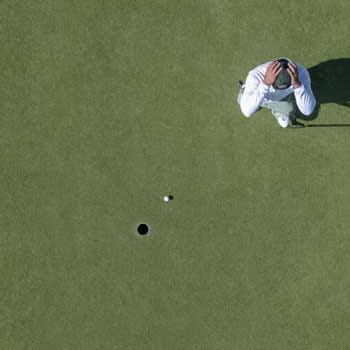
- Under-reading break: Most golfers consistently under-read break. When in doubt, add a cup more than you think. Missing on the high side (the “pro side”) gives the ball a chance to fall in.
- Poor speed control: More putts are missed because of speed than line. A putt that runs 18 inches past gives you a 4-footer back. Dial in your speed, and the line becomes less critical.
- Lifting the head early: Peeking at the hole causes the head to move, which moves the shoulders, which moves the putter. Keep your eyes down until you hear the ball hit (or miss) the cup.
- Decelerating at impact: The most common stroke fault. Commit to a full, smooth follow-through on every putt.
- Overthinking the read: Reading a putt for 90 seconds doesn’t make it more accurate — it makes you more anxious. Commit to your read within 30 seconds and trust it.
Recovering From Errors on the Green
Even the best putters in the world three-putt. What separates good putters from great ones is how quickly they reset mentally and physically.
- After a bad putt, identify one specific reason (speed or line) – not three. Fix one thing at a time.
- Use a pre-putt routine as your anchor. Returning to your routine grounds you and prevents spiral thinking.
- If you’re leaving everything short, add one more club length to your follow-through thought.
- If you keep missing the same side, trust the miss and aim further away from it on the next putt.
- Take a breath before your next putt. Tension in the hands comes from tension in the mind. Reset.
Recovery is a skill just like putting itself. The golfers who can shake off a bad putt immediately are the ones who post the best scores.
What and How to Practice
Random ball dropping on the practice green doesn’t build skill. Here’s how to practice purposefully:
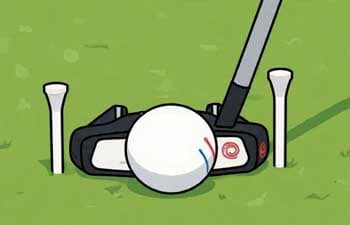
- The Gate Drill: Place two tees just wider than your putter head, 6 inches in front of the ball. Roll putts through the gate. This trains a square face path.
- 3-6-9 distance drill: Place balls at 3, 6, and 9 feet from the hole. Make three consecutive putts at each distance before moving on. This builds pressure tolerance.
- Lag putting to a towel: Place a folded towel 20, 30, and 40 feet away and try to stop balls on the towel. Speed control practice beats line practice for reducing three-putts.
- Circle drill: Place 6 tees in a circle around the hole at 3 feet. Make all 6 without missing. Then move to 4 feet. This builds confidence under pressure.
- Use a putting mirror: This training aid gives instant feedback on eye position, shoulder alignment, and face angle – three of the biggest putting variables.
Practice with purpose. Twenty minutes of deliberate putting practice is worth more than an hour of casual rolling.
How This System Lowers Your Score and Handicap
Here’s some math that motivates: if you currently average 36 putts per round and reduce that to 30, you’ve just shot a 6-stroke lower round without changing a single tee shot. Implement the habits above consistently, and here’s what improves:
- Fewer 3-putts: The single biggest strokes-gained opportunity for amateur golfers. Reducing from 4 per round to 1 saves 3 strokes per outing.
- More one-putts inside 10 feet: Short-putt confidence turns bogeys into pars and pars into birdies.
- Better lag control: Consistently leaving tap-ins eliminates blow-up holes that spike your handicap.
- Improved mental game: A structured pre-putt routine reduces anxiety and creates consistency under pressure.
- Handicap drop of 2–5 strokes: Realistic for most golfers who commit to 60 days of purposeful putting practice using this system.
Putting is the most democratic skill in golf. It doesn’t care how far you hit the ball. Apply this system consistently, and your scorecard will reflect it.
If These Articles Help,
Running Golf Course Intel takes real time, real effort, and – yep – real golf balls. If you’ve enjoyed the guides, the strategy breakdowns, or the myth‑busting articles, hitting that Buy Us Golf Balls button is the easiest way to help keep the site online and the content flowing. Every donation, big or small, genuinely fuels the next round of smarter golf insights.
Thanks for helping us keep this thing rolling!
Request Your Golf Course Intel Strategy Guide
You’ve got the putting system. Now let’s build the complete picture.
Golf Course Intel Strategy Guides are personalized playbooks designed specifically for your game. Here’s what’s inside:
- Personalized drills and stretches tailored to your age, flexibility, and current skill level
- The perfect golf ball and club recommendations matched to your swing speed, shot shape, and playing goals
- A full course management framework that helps you make smarter decisions on every hole – not just the tee box
This isn’t a generic PDF. It’s a strategic guide built around how YOU play golf.
Your best rounds are ahead of you. Let’s go get them.