
Amateur Golfer Par 3 Stats: Real Scores & Tips
Teeing up on a short hole brings an exhilarating rush to players of any age or gender. A mid-iron in hand provides a distinct sense of optimism for carding an easy par. You envision a beautiful trajectory landing softly next to the flagstick while your friends offer generous applause.
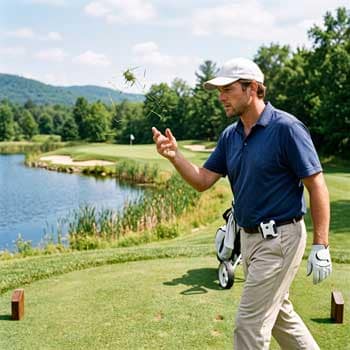
During a recent Friday morning round at Stoney Creek Golf Club, I stepped onto the gorgeous 160-yard 17th featuring a tricky right bunker (left is a pond and death). The sun shined brightly, creating a spectacular setting for a solid swing. Taking my trusty hybrid out of the bag gave me immense confidence.

A crisp strike felt absolutely magnificent leaving the clubface. We watched my ball sail beautifully through the air before splashing directly into the pond bordering the left edge.
Laughter immediately erupted from my group because these relatable moments happen to everyone who picks up a club. Exploring exactly how everyday players perform on these holes reveals some highly actionable trends. Analyzing real amateur golfer par 3 stats helps us craft smarter strategies for our weekend rounds.
The Real Score Data by Handicap
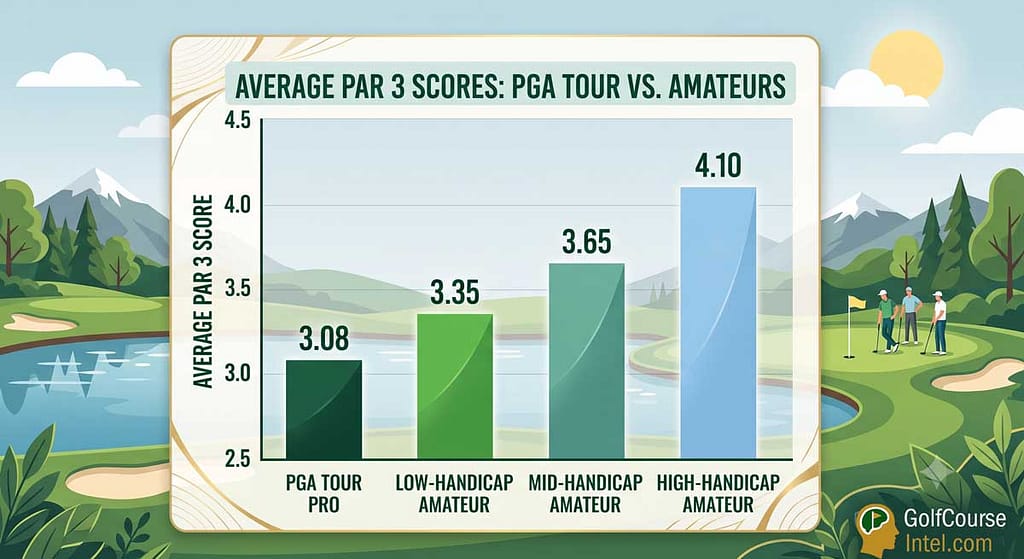
Watching professionals compete on television makes securing a par look incredibly routine. Tour players maintain a scoring average near 3.08 on these holes, consistently posting low numbers.
But everyday enthusiasts experience a significantly different reality out on the local links.
Tracking data from millions of rounds shows that
- Mid-handicap players average close to 3.7 strokes.
- High-handicap golfers, generally playing to a 20 or higher index, routinely score above a 4.0 on layouts stretching beyond 180 yards.
Setting a goal to secure a comfortable bogey on a difficult par 3 is a brilliantly strategic approach. Embracing this positive mindset completely relieves the pressure of trying to execute a heroic shot over massive trouble. Treating a lengthy 220-yard par 3 like a short par 4 instantly transforms your course management into a highly successful formula.
Examining Our Miss Percentages: Short vs. Long
Evaluating where our golf balls actually finish when we miss the green provides tremendous value.
Across all skill levels, players have a profound tendency to leave their approach shots short of the target. This phenomenon stems from selecting clubs based entirely on maximum potential carry distance.
Players achieve better results by choosing clubs based on their comfortable, everyday stock yardage. As a player’s handicap increases, the likelihood of coming up short rises dramatically, while the percentage of long misses remains remarkably consistent:
| Handicap Level | Miss Short Percentage | Miss Long Percentage |
| Scratch (0) | 25% | 6% |
| 5 Handicap | 39% | 5% |
| 10 Handicap | 42% | 6% |
| 15 Handicap | 54% | 5% |
| 20 Handicap | 59% | 4% |
| 25 Handicap | 69% | 4% |
A scratch golfer leaves the ball short roughly 25% of the time. Mid-handicappers fall short on 42% to 54% of their approaches. High-handicap players find themselves short of the putting surface a staggering 59% to 69% of the time.
Taking one extra club entirely bypasses those cleverly designed traps guarding the front edge. A smooth, controlled swing with a forgiving iron yields significantly better contact than swinging aggressively with a shorter club.
The comprehensive published course guides at GolfCourseIntel provide specific advice for navigating these exact yardage dilemmas on any layout.
The Left vs. Right Miss
Analyzing directional misses on approach shots from within 150 yards highlights another distinct pattern across the amateur spectrum.
Everyday golfers slightly favor a miss to the right side of the target. Data shows that a short-right miss happens 19.0% of the time, followed closely by a short-left miss at 17.4%.
Missing long-left occurs on 8.0% of swings, while long-right happens just 6.2% of the time. Sliced or pushed shots typically lose velocity and stop quicker, resulting in the higher short-right frequency. Pulled shots usually feature a closed clubface, which naturally carries the ball further down the fairway.
Factoring these tendencies into your alignment creates a fantastic opportunity to play safer, smarter golf.
Finding Hazards and Dispersion Bands
Understanding your personal dispersion band dictates your probability of finding bunkers or water hazards.
Elite amateurs boasting a 0 to 5 handicap maintain a tight dispersion of approximately 18 yards with a mid-iron. This compact grouping allows them to successfully aim away from greenside trouble and hit the putting surface roughly 53% of the time from 150 to 200 yards.
Players carrying a 10 to 15 index see their dispersion widen to between 22 and 27 yards, catching the green about 20% of the time.
Golfers with a 20-plus handicap experience a dispersion expanding to 35 yards or more, finding the dance floor less than 10% of the time from those distances.
With such a high percentage of approaches falling short, these higher-handicap players interact with front and lateral hazards constantly. Course architects deliberately place deep bunkers in these exact high-traffic zones. Aiming for a generous bailout area away from primary hazards becomes a mathematical necessity for saving valuable strokes.
You can read more about outsmarting these layouts in the insightful article The 7 Hidden Course Design Traps That Add Strokes.
Counting the Putts

Arriving near the green presents the next interesting challenge for amateurs of all abilities.
Missing the putting surface completely means a delicate wedge shot is immediately required. Average players frequently struggle to chip the ball close enough for a stress-free tap-in. Elevating your short game requires relying on a trusty wedge to cleanly loft the ball onto the fringe.
Amateurs generally average around 2.1 to 2.3 putts per par 3. Securing a par becomes quite difficult when your first putt originates from twenty feet away. Aiming directly for the center of the green is a brilliant strategy to increase your Greens in Regulation and reduce your total putts.
Giving yourself a straightforward two-putt from the middle of the dance floor builds incredible momentum for the rest of your round. Practicing those crucial lag putts from thirty feet away works wonders for your overall confidence.
Bringing It All Together
Every single round brings a fresh opportunity to test your skills and enjoy the great outdoors.
Reviewing these fascinating amateur golfer par 3 stats equips you with the knowledge to play smarter, more analytical golf. Choosing the right club, aiming for the center of the green, and managing your personal expectations will significantly enhance your scorecard.
Embrace the challenge with a big smile and a wildly positive attitude! The perfect swing is always just one hole away, ready to reward your smart strategic choices.
If These Articles Help,
Running Golf Course Intel takes real time, real effort, and – yep – real golf balls. If you’ve enjoyed the guides, the strategy breakdowns, or the myth‑busting articles, hitting that Buy Us Golf Balls button is the easiest way to help keep the site online and the content flowing. Every donation, big or small, genuinely fuels the next round of smarter golf insights.
Thanks for helping us keep this thing rolling!