
Common Golf Terms: A Friendly Guide to the Fairway

Stepping onto a tee box often feels like entering a completely foreign country. Golfers use a totally unique vocabulary that takes time to master. Hearing a playing partner excitedly talk about an albatross or groan about a shank might leave a newcomer scratching their head in confusion.
My own personal golf journey involves a handicap tracking between 17.8 and 21.6, which guarantees I intimately know every single word on this list. Golf should always be fun, relatable, and easy to understand for everyone.
The Vocabulary of Scoring
Understanding how we keep score adds immense excitement to the weekend round.
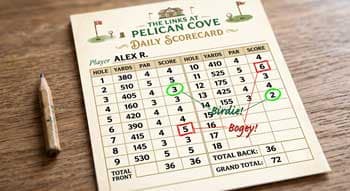
- Birdie: Completing a hole one stroke under par. Sinking that final putt brings an unmatched rush of adrenaline.
- Eagle: Finishing two strokes under par. Hitting the green in two on a par-5 usually sets up this fantastic opportunity.
- Albatross: A spectacular three strokes under par. Most players go their entire golfing lives without ever witnessing one of these rare birds.
- Par: The standard number of strokes an expert player expects to need to complete an individual hole. Achieving par consistently remains the ultimate goal for amateurs.
- Bogey: Finishing one stroke over par. Occasional bogeys happen to absolutely everyone, keeping the game wonderfully challenging. Add a “double” or “triple” prefix to indicate two or three strokes over the expected score.
- Handicap: A numerical measure of a golfer’s potential playing ability based on the tees played for a given course. This brilliant system allows players of different skill levels to compete fairly against one another.
The Landscape of the Course
Every piece of grass and sand carries a specific name to help players navigate the property.
- Driving Range: The practice facility where players warm up before a round. Hitting a small bucket of balls here helps loosen up stiff muscles.
- Fairway: The closely mown area of grass connecting the tee box to the hole. Keeping your drive on this short grass makes the next shot significantly easier. During a recent round at The Challenge Golf Course, the flat, undulating fairway of hole 5 demanded a carefully positioned tee shot to set up the approach.
- Green: The ultra-smooth, highly manicured putting surface surrounding the hole.
- Trap: Another common name for a sand bunker. Navigating the right-side traps on hole 2 at The Challenge requires precise club selection off the tee.
- Waste Area: Large sandy, rocky or overgrown sections of the course that remain unmaintained. Players can ground their clubs in these natural areas before swinging.
- Penalty Area / Water Hazard: Sections of the property marked by red or yellow stakes, usually containing lakes or creeks. Keeping the ball dry at The Challenge Golf Course means properly accounting for the large lake bordering holes 6, 7, and 8.
- OB (Out of Bounds): White stakes marking the extreme boundary of the playable course. Hitting past these markers means adding a penalty stroke and replaying the shot from the original spot.
You can read our complete strategy breakdown regarding this specific layout in the GolfCourseIntel.com Guide to The Challenge Golf Course – pay what you think is fair!
Ball Flights: The Curves and Lines
Watching the ball soar through the sky provides essential feedback about your swing path and clubface control.
- Draw: A shot starting slightly right of the target and gently curving back to the center (for right-handed players). Hitting a controlled draw requires excellent timing.
- Fade: A ball starting slightly left and curving gently to the right. Professional players often rely on this highly predictable path to find tight landing zones.
- Slice: An exaggerated curve moving severely from left to right. My trusty Cobra 3-wood occasionally produces this dramatic shape when I swing a bit too aggressively.
- Hook: A sharp, aggressive curve diving from right to left.
- Push: The shot immediately launches right of your intended target line and stays completely straight without curving.
- Pull: The ball launches left of the target and continues perfectly on that straight path. Taking careful aim on the tee box helps minimize these frustrating directional misses.
The Mishits
Every single golfer experiences poor contact during their career. Laughing these awkward moments off keeps the round enjoyable for your entire group.

- Shank: Striking the ball with the hosel (the metal neck of the club). The ball immediately shoots off at a severe right angle.
- Duff: Hitting the ground heavily before making contact with the golf ball. The shot typically travels only a few sad yards forward.
- Whiff: Swinging the club with maximum effort and missing the ball completely. A gentle practice swing helps restore confidence after this humbling event happens.
- Thin: Striking the golf ball too near its equator with the very bottom edge of the club. The resulting shot flies exceptionally low and extremely fast.
Course Jargon and Etiquette
Beyond the physical swing, specific vocabulary describes the social rules of the game.
- Breakfast Ball: A casual mulligan taken specifically on the very first tee shot of the day. Hitting a terrible opening drive allows you to simply tee up another one and playfully blame the lack of morning coffee.
- Fore!: A loud warning shout used when a struck ball heads dangerously toward other people on the property. Always yell this immediately if your shot goes astray.
- You can also add directional detail to your shout: “Fore Left!” or “Fore Right!“
- Divot: The chunk of turf sliced out of the ground during a powerful iron swing. Replacing the grass preserves the pristine condition of the fairways for the next group.
- A particularly long divot of turf is referred to as a “Beaver Tail“.
Equipment Language
Knowing your gear deeply enhances your overall course strategy and daily performance.
- Loft: The precise angle of the clubface relative to the shaft. For example, my 49-degree approach wedge provides excellent height for delicate short shots over greenside obstacles.
- Alignment Aid: Helpful visual markings printed directly on the golf ball. I regularly tee up a TaylorMade Tour Response Stripe ball to help visualize the perfect putting line toward the cup.
Speaking the language makes joining a brand new group significantly less intimidating. Your confidence will grow directly alongside your expanding vocabulary. Exploring entirely new tracks becomes much easier when you understand the yardage book perfectly.
For more detailed reviews and tips, browse our growing library of GolfCourseIntel.com course guides to plan your next amazing weekend adventure. Grab your clubs, head straight to the first tee, and have a fantastic time out there.
If These Articles Help,
Running Golf Course Intel takes real time, real effort, and – yep – real golf balls. If you’ve enjoyed the guides, the strategy breakdowns, or the myth‑busting articles, hitting that Buy Us Golf Balls button is the easiest way to help keep the site online and the content flowing. Every donation, big or small, genuinely fuels the next round of smarter golf insights.
Thanks for helping us keep this thing rolling!
Golf Course Owners and Managers:
Give your patrons a competitive edge at their favorite local track! Request a bespoke, highly detailed guide for your course to share in your pro shop or online, with members, guests, and the public.
Contact us for a quote:






0 Comments