
Stop Blowing Up the Same Holes Every Round
Every golfer knows the feeling. You reach that hole that seems to have your number. Whether it’s a narrow fairway or a tricky green, these challenges can feel overwhelming.
Fortunately, playing these holes successfully is entirely possible with a positive mindset and a clear plan.
Here’s a listing of our golf tips for 6 types of difficult golf holes:
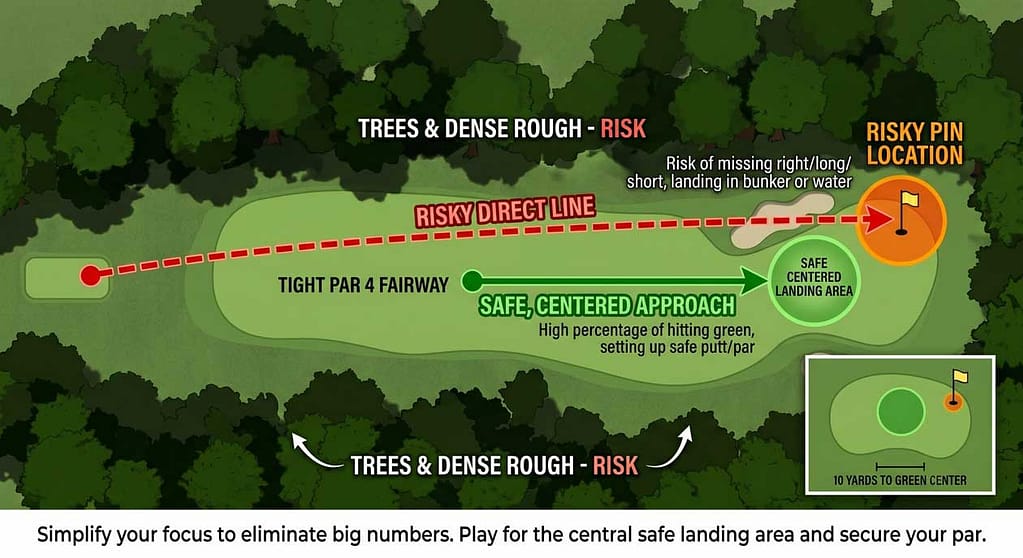
1. The Long, Tight Par 4
Narrow fairways reward the patient player and punish the aggressive one. Here’s how to think your way through it.
The Challenge
- Tight fairways leave almost no margin for error off the tee
- Missing the short grass often means a blocked-out or awkward second shot
- The urge to hit driver hard is exactly what the hole wants you to do
The Strategy
- Choose a club that prioritizes accuracy over distance. Being in the fairway matters more than being close
- Aim for the center of the fairway, not the line that flirts with trouble near the flag
- Play your approach to the center of the green; a comfortable two-putt par beats a scrambled double every time
2. The Forced-Carry Par 3

There’s no safe route and nowhere to hide. The key is committing before you ever take the club back.
The Challenge
- Hazards between tee and green eliminate any bail-out option
- The visual pressure tightens your grip and shortens your swing
- Adrenaline causes most golfers to over-swing and come up short anyway
The Strategy
- Pick a precise target and commit completely; doubt at address is more dangerous than any hazard
- Take one more club than instinct suggests – smooth beats hard every time on these holes
- Focus on a full, balanced finish rather than forcing the distance
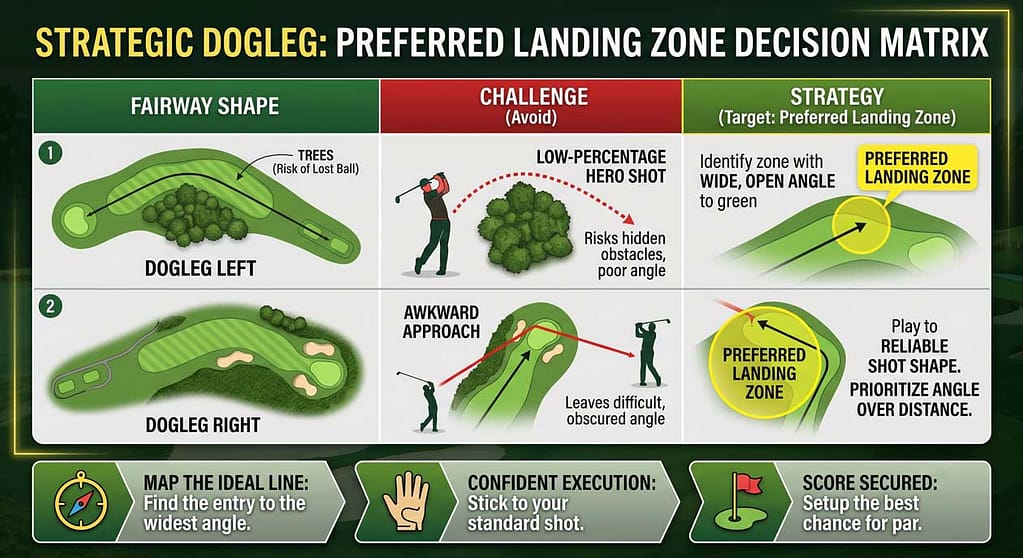
3. The Strategic Dogleg
The hole bends. Your decision-making shouldn’t.
The Challenge
- The corner hides the ideal line and tempts you into low-percentage hero shots
- Cutting too much of the dogleg risks trees, rough, or a lost ball
- A poor landing zone leaves an awkward angle that complicates your entire approach
The Strategy
- Identify the landing zone that gives you the widest, most open angle into the green
- Play to your reliable shot shape — this is not the hole to try something new
- Prioritize angle over distance; a shorter tee shot in the right spot beats a longer one in trouble
4. Challenging Green Complexes
Severely sloped greens don’t just punish bad approaches – they punish good ones aimed at the wrong spot. The difficulty isn’t the fairway, but the green itself: severely sloped, fast, and punishing if you end up above the hole.
The Challenge
- Tight pin positions on severe slopes make the target look smaller than it is
- Attacking the flag leaves above-hole putts that are nearly impossible to control
- One bad club or trajectory choice turns a solid approach into a three-putt
The Strategy
- Read the green’s slope before you pull a club — your landing spot is as important as your yardage
- Always favor the fat part of the green over a flag-hunting approach
- Land below the hole to set up an uphill putt with manageable speed
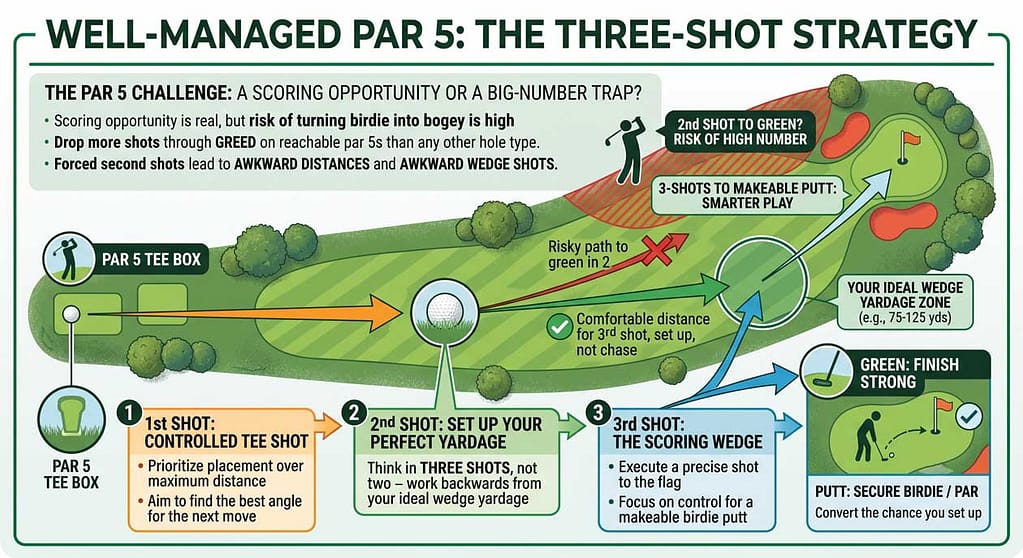
5. The Reachable Par 5
The scoring opportunity is real, but so is the risk of turning a birdie hole into a bogey.
The Challenge
- The temptation to go for the green in two leads to big numbers when it goes wrong
- A forced second shot often leaves an awkward distance that doesn’t suit your wedge
- More shots are dropped on reachable par 5s through greed than any other hole type
The Strategy
- A controlled wedge to a makeable birdie putt is almost always the smarter play
- Think in three shots, not two — work backwards from your ideal wedge yardage
- Use your second shot to set up a comfortable distance, not to chase the green
6. Navigating Hazards
Bunkers, water, and rough have one thing in common: they reward the golfer who stops looking at them.
The Challenge
- Hazards demand your attention and have a way of getting exactly that
- Focusing on trouble sends the ball straight to it – your brain doesn’t process “avoid”
- Fear and hesitation at address destroy both tempo and commitment
The Strategy
- Commit to your target with a decisive swing; a confident strike toward a clear picture beats a technically perfect swing with a doubtful mind
- Fix your focus entirely on where you want the ball to land, not on what you want to miss
- Visualize the full shot – shape, flight, and landing spot – before stepping in
Core Principles for Every Tough Hole
- Play Your Game: Do not let the course dictate a swing you don’t own. If you fade the ball, aim to play a fade.
- Focus on the Process: A pre-shot routine is your best defense against the pressure of a difficult hole. It helps maintain the same rhythm you use on easier holes.
- Avoid the “Double”: Your goal is to eliminate big numbers. A bogey is acceptable; a triple-bogey is often the result of one bad decision following an initial mistake. Play for damage control when you get into trouble.
Final Thoughts
Smart course management makes golf more fun. By focusing on your strengths and planning your shots, you’ll turn difficult holes into opportunities for success. Share these tips with your golf partners!
If These Articles Help,
Running Golf Course Intel takes real time, real effort, and – yep – real golf balls. If you’ve enjoyed the guides, the strategy breakdowns, or the myth‑busting articles, hitting that Buy Us Golf Balls button is the easiest way to help keep the site online and the content flowing. Every donation, big or small, genuinely fuels the next round of smarter golf insights.
Thanks for helping us keep this thing rolling!