
Teeing Off in the Capital: A Hole-by-Hole Review of East Potomac’s Blue Course
Picture this: you are standing on a sun-drenched tee box with the Washington Monument looming beautifully in the background. A gentle breeze off the Potomac River brushes past your face, creating a perfect atmosphere for a morning round.
We are talking about East Potomac Golf Links, specifically the historic Blue Course, located in East Potomac Park on the Hains Point Island in Washington, D.C. (the nation’s first Cherry Blossoms can be found at the course). If you’re a passionate mid-handicapper, you will find this layout incredibly tempting, yet it holds unique characteristics that demand a tailored approach.
So grab your favorite beverage, pull up a comfortable chair, and let’s dive into a highly effective East Potomac Blue Course strategy designed specifically to shave strokes off your game.
Location and Historic Roots
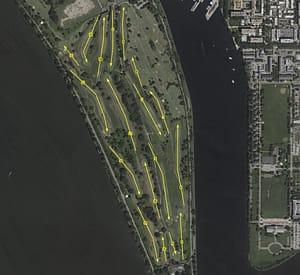
Situated perfectly on a crescent-shaped island right in the heart of Washington, D.C., this property boasts an incredible architectural pedigree.
The legendary Walter Travis originally mapped out these exact grounds back in 1920, creating a widely praised 18-hole design that eventually hosted the prestigious 1923 U.S. Public Links Championship.
You can absolutely still feel that golden-age architecture echoing through the flat topography today. As we explored, embracing the original roots of a facility always enhances the scenic walking experience.
Current Conditions and Municipal Charm
Today’s Blue Course serves up a truly authentic municipal golf experience. Heavy daily play and shifting mid-Atlantic seasons mean you will encounter highly variable turf, including occasionally barren fairway patches and aerated greens.
We highly recommend leaning joyfully into these rugged characteristics! Slower greens require a consistently firm, aggressive putting stroke to reach the hole safely. Patchy rough makes your fairway accuracy a massive competitive advantage. Golfers must gracefully accept the unpredictable bounces inherent to municipal golf. A perfectly struck iron might ricochet wildly off a hidden earthen mound, while a thinly hit wedge could miraculously skip over a bunker and nestle close to the pin.
Smart Club Selection and The “Chipper“
If you are a player swinging around 90 mph with your driver (a typical mid-handicapper), fairway woods off tight municipal lies can cause severe contact issues. Those thin or topped fairway metals absolutely crush your Strokes Gained averages. Exchange your 3-wood for a trusty 5-hybrid on your long approach shots. The shorter shaft guarantees much better low-point control, advancing the ball steadily and predictably toward the pin.
Around the greens, a Chipper becomes your absolute best friend. Since the terrain lacks severe elevation changes, this specialized club shines brilliantly. The Chipper is designed to be used with a standard putting stroke for bump-and-run shots around the green. Implementing this simple tool immediately boosts your scrambling percentages on those tricky, bare lies.
Reserve those high-flying flop shots for lush, plush turf conditions. The bump-and-run approach provides exceptional reliability here. Just pick out a flat landing zone, trust your pendulum motion, and watch the ball trundle toward the cup like a happy golden retriever fetching a tennis ball.

Choosing the Right Golf Ball
Your equipment must match the playing environment perfectly. When navigating firm municipal turf, stopping power reigns supreme.
For example, the TaylorMade Tour Response serves as a stellar match for these exact course conditions. It has a low 70 compression core and allows moderate swing speeds to maximize energy transfer and carry distance. The 100% cast urethane cover grabs the clubface beautifully, providing that essential tour-level bite required to hold the putting surface on approach shots.
Consider investing in a GolfCourseIntel.com Fairway Fundamentals – Golf Ball Analysis for a deep dive into why these specific cover materials matter so much for your short game, and get recommendations for the best ball to use for your game.
Navigating Signature Holes
Strategic course management separates good rounds from truly great ones. Applying our East Potomac Blue Course strategy means playing the percentages:
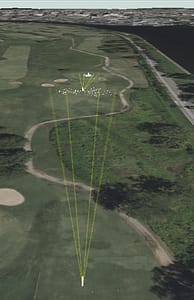
- Hole 5: This hole presents a highly tempting 281-yard Par 4 from the Gold tees. Send your driver right at the green to leave a simple 75-yard wedge to the flag.
- Hole 8: This hole sits completely exposed to the wind as a beastly 186-yard Par 3. The green slopes severely back to front and features deep bunkers guarding the entrance. Play a conservative hybrid short of the sand traps. This brilliant layup gives you a straightforward uphill bump-and-run with your Chipper, easily securing your par or bogey.
- Hole 14: This stout Par 4 marches straight along the scenic waterfront. The narrow fairway features penal mounds of thick fescue grass. Keep your tee ball aimed down the left-center to avoid the river entirely, setting up a clear mid-iron approach into the uniquely elevated putting surface.
Wrapping Up Your Round
Golf always challenges us to adapt our mindset. East Potomac asks you to rely heavily on ground dynamics, favor hybrids over long woods, and putt with absolute conviction.
Apply these actionable tactics during your next Washington D.C. outing, and watch those scores plummet beautifully.
If These Articles Help,
Running Golf Course Intel takes real time, real effort, and – yep – real golf balls. If you’ve enjoyed the guides, the strategy breakdowns, or the myth‑busting articles, hitting that Buy Us Golf Balls button is the easiest way to help keep the site online and the content flowing. Every donation, big or small, genuinely fuels the next round of smarter golf insights.
Thanks for helping us keep this thing rolling!
Golf Course Owners and Managers:
Give your patrons a competitive edge at their favorite local track! Request a bespoke, highly detailed guide for your course to share in your pro shop or online, with members, guests, and the public.