
Where Are Most Golf Balls Lost?
We’ve all watched a brand-new Pro V1 arc beautifully off the tee, only to vanish somewhere between the fairway and the next county. Losing golf balls is part of the game, but losing too many costs you strokes, money, and – let’s face it – a little bit of your dignity. The good news? Most ball loss follows very predictable patterns, and once you know where and why it’s happening, you can stop it.
Whether you’re a weekend warrior shooting in the 90s or a single-digit handicapper, this guide covers everything: which holes swallow balls most, how course design and conditions play a role, and the routines that quietly protect your scorecard every single round.
Which Holes Steal the Most Golf Balls?
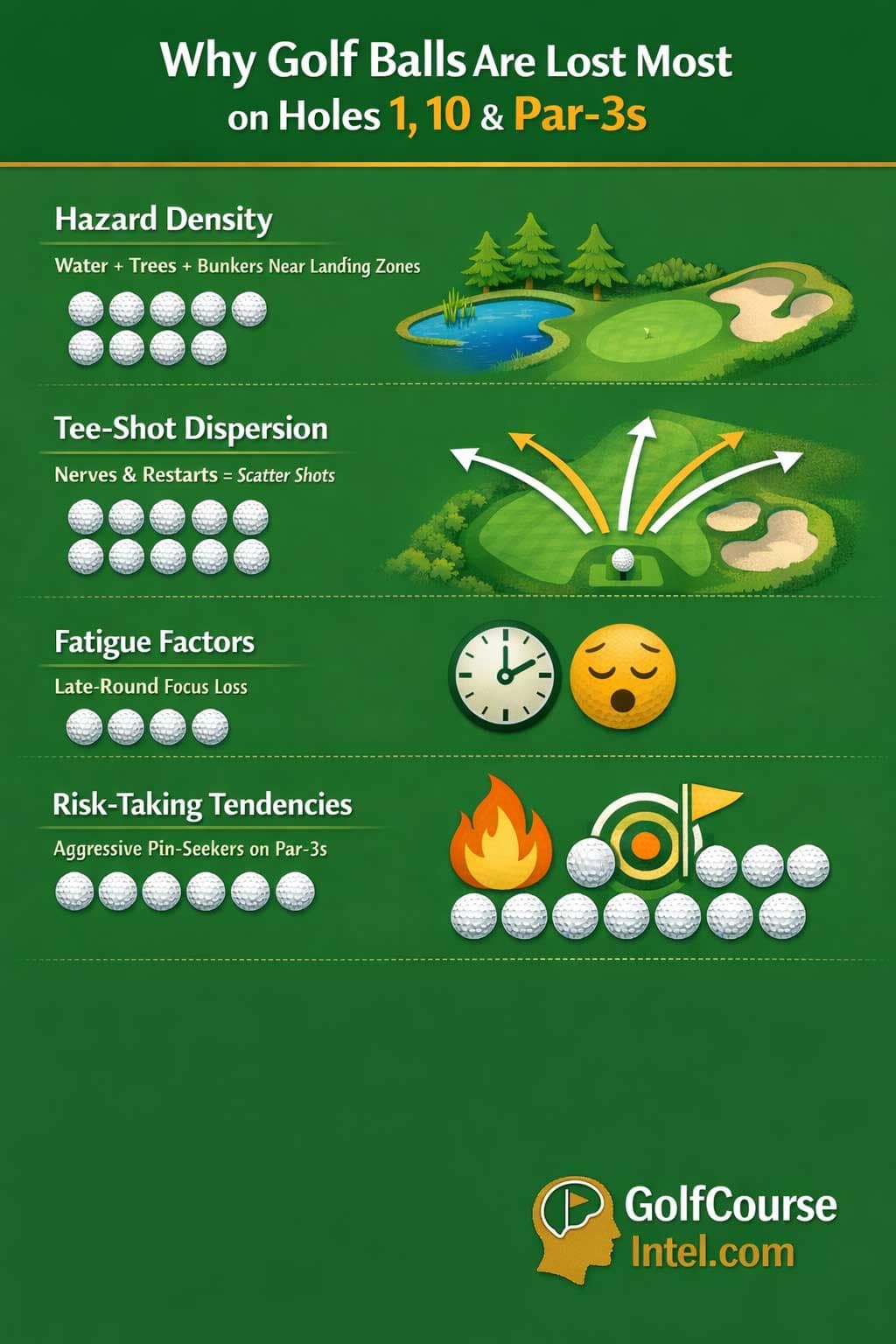
Research and on-course data consistently point to the same culprits: hole #1, hole #10, and par-3s rank as the highest ball-loss holes on virtually every course.
Hole #1 is a confidence trap. You’re not yet warmed up, adrenaline is running hot, and you’re trying to make an impression. The result? Wayward drives into trouble you haven’t scouted yet.
Hole #10 mirrors this problem – it’s essentially a second first tee after a mental reset at the turn.
Par-3s punish inaccuracy mercilessly because there’s no fairway safety net; it’s flag or hazard.
Long par-5s and tight dogleg par-4s are the next biggest offenders, especially when water or out-of-bounds lines flank the fairway on the aggressive angle.
Tee Selection: The Decision That Changes Everything
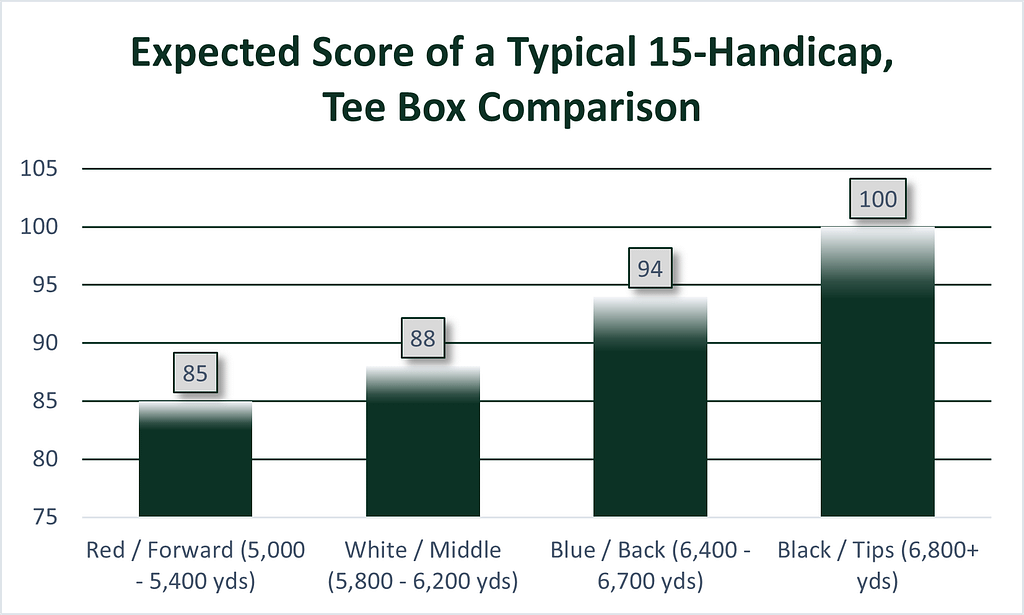
Playing tees that are too long for your current skill level is one of the single biggest causes of ball loss. When you’re constantly over-swinging off the tee or hitting 3-wood or hybrid into greens guarded by water, you stack the odds against yourself every hole.
A simple rule: if you’re averaging fewer than 220 yards off the tee, play the forward or middle tees without apology. The USGA’s “Tee It Forward” initiative exists for exactly this reason – shorter distances mean more fairways hit, fewer forced carries over hazards, and dramatically fewer lost balls.
Check out GolfCourseIntel.com’s guide to tee selection for detailed recommendations based on your handicap and driving distance.
Course Slope, Rating & What They’re Telling You
The Course Rating predicts how many strokes a scratch golfer will take; the Slope Rating (55–155, with 113 as average) tells you how much harder the course is for a bogey golfer versus a scratch golfer. A slope above 130 means the course heavily penalizes mishits – exactly the conditions where balls disappear.
Before your round, look up both numbers. If the slope is 135+ and you’re a 15-handicapper, expect a challenging day and plan conservatively. Take a club less on tee shots to keep the ball in play, accept bogeys gracefully, and target the fattest part of the green.
Golf Ball Selection: Are You Playing the Wrong Ball?

High-spin tour balls (think: Titleist Pro V1, TaylorMade TP5) magnify both your best and worst shots. For mid-to-high handicappers, that extra spin turns a slight miss into a duck hook that finds the trees.
A low-spin, two-piece distance ball like the Callaway Supersoft or Srixon AD333 is far more forgiving – it flies straighter on off-center hits and costs half as much when it does find trouble.
Match your ball to your game, not your ego. As your handicap drops, you can move up the performance ladder.
Check out GolfCourseIntel.com’s guide to golf ball selection for personal recommendations based on your specific game.
Type of Golf Course: Know What You’re Walking Into

- Parkland courses lined with trees and water hazards are the biggest ball eaters.
- Links-style courses (open, windy, firm ground) often look harder but can actually be more forgiving – a ball hit offline may just roll into rough rather than a pond.
- Desert courses present unique challenges: ball-eating scrub brush on both sides and minimal room for error. Always play conservatively into desert carries.
- Resort courses often sacrifice playability for aesthetics, meaning island greens and dramatic water features that look stunning but punish every miss.
GolfCourseIntel.com’s Course Types and and How to Conquer Them article is fantastic resource for pre-round research before you visit a new track.
Club Selection Per Shot: Smarter Choices, Fewer Lost Balls
The number one club selection mistake that costs balls: reaching for driver when control is more valuable than distance. On tight holes, a 3-wood, 5-wood, or even a long iron off the tee gives you a better chance of finding the fairway.
Around hazards, always take one club more than you think you need and swing easy. A smooth 7-iron beats a hard 8-iron every time for accuracy. And when you’re in trouble? The punch-out back to the fairway is almost always the smarter play – it trades one stroke for two or three.
Pre-Round Routine: Prepare to Keep the Ball in Play
A solid pre-round routine isn’t just about warming up your swing – it’s intelligence gathering.
- Study the scorecard and yardage book before you hit a shot. Know where the hazards are on every hole.
- Walk or drive the course layout on your GPS app and note out-of-bounds lines.
- Hit at least 20 practice balls, starting with wedges and finishing with your driver.
- Make a game plan for your three or four highest-risk holes. Decide before you’re standing on the tee whether you’ll hit driver or lay back.
Pre-Shot Routine: The Four Seconds That Save Balls

Your pre-shot routine should include a deliberate target selection step where you pick the most generous target – not the most aggressive one.
Ask yourself: “What’s the worst result if I miss left? Miss right?” Choose the miss direction that lands in safety, and aim accordingly.
Standing behind the ball and picking an intermediate target 12 inches in front of the ball for alignment is one of the most underutilized techniques in amateur golf. Tour pros do it on every single shot. You should too.
Post-Round Routine: Learn From Every Lost Ball
Keep a simple shot tracker (even just a notes app on your phone) and record where you lost each ball. After three to four rounds, patterns emerge. Are you consistently losing balls left on the 4th hole? That tells you your misses there have a cause – likely alignment, swing path, or club selection – that practice can fix.
GolfCourseIntel.com has resources on Pre- and Post-Round Routines & Analysis that can accelerate this learning process significantly.
Practice Routines That Directly Reduce Ball Loss
1. Alignment Stick Drills (10 min): Place two alignment sticks on the ground, one for foot line and one for target line. Most amateur golfers are dramatically open or closed at address without realizing it.
2. Miss-Direction Practice (10 min): Pick targets with intentional margins – “I want to miss right of that flag, not left.” Training your miss to be predictable is more valuable than eliminating it entirely.
3. Course Simulation (10 min): Pick real holes from your home course and play them on the range. “This is hole #7 – water left, trees right. Driver is a 3-wood today.” Make game-like decisions under mild pressure.
Recovery From Errors: Minimizing the Damage
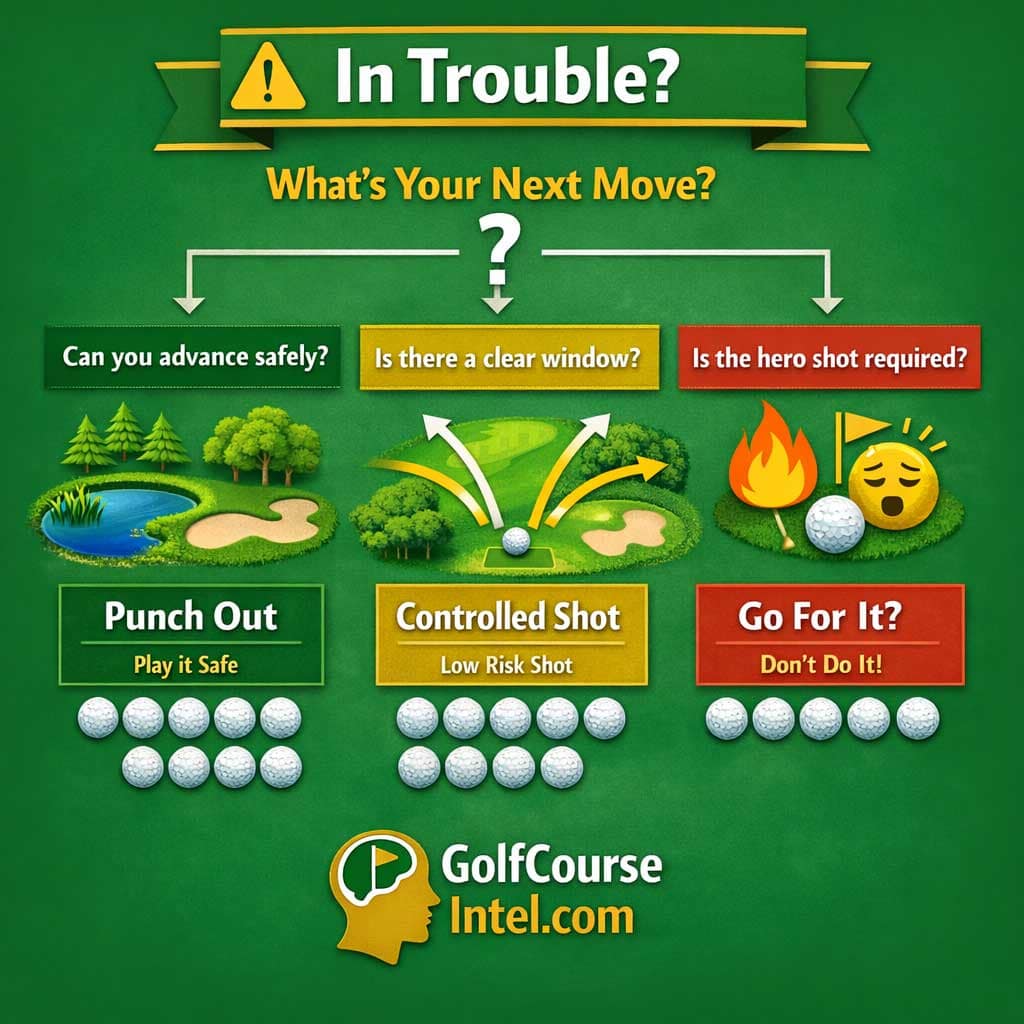
When you do find trouble, your damage-control instincts matter enormously. The two golden rules of trouble play:
- Never compound the error. If you’re behind a tree, punching out sideways is always better than a hero shot over the top.
- Take your medicine before it gets expensive. A double-bogey that you manufactured from a bad lie is infinitely better than a quadruple you earned trying to reach a par-5 in three from knee-high rough.
Accepting a penalty drop early and playing from a good lie is often the fastest way back to bogey or better.
Time of Day & Season: Conditions That Cost You Balls

- Morning rounds carry the risk of dew-soaked rough that grabs and twists club faces at impact, turning mild misses into bigger ones.
- Late afternoon brings challenging shadows that can make it genuinely hard to track your ball – always watch flights all the way to landing on late-day rounds.
- Seasonally, fall rounds in deciduous areas are notoriously ball-hungry. Leaves cover the rough from early October onwards, and balls simply vanish. Play a slightly more conservative game plan in fall and always note where your ball crossed the rough line before going to look.
- Wind conditions are the wild card that catches everyone off guard. On windy days, take 1–2 clubs more on approaches and widen your target window – balls in the center of the green, even 40 feet from the flag, are always better than balls in greenside bunkers or water.
Physical and Mental Health: The Hidden Ball-Savers

Fatigue is one of the most underrated causes of ball loss. When you’re physically tired – especially on holes 14–18 – decision-making suffers, swing mechanics break down, and “go for it” choices multiply. A few practical recommendations:
- Hydrate consistently throughout the round. Even mild dehydration impacts focus and coordination.
- Eat a small snack at the turn (holes 9–10) to maintain energy.
- Walk when possible. Studies show walking golfers make better decisions than cart-only players, likely due to increased blood flow and time to think between shots.
- Breathe before pressure shots. A 4-count inhale and exhale before your pre-shot routine visibly reduces tension and improves contact.
- Stretch before your round. Even 5–7 minutes of hip, shoulder, and thoracic rotation work dramatically reduces the errant first-tee swings that cost you a sleeve of balls before hole #3.
The Bottom Line: Every Ball Saved Is a Stroke Saved
Losing fewer golf balls is one of the clearest, most direct paths to a lower handicap. A ball lost costs you a stroke plus distance – mathematically one of the worst outcomes in golf. But as you’ve seen in this guide, nearly every ball loss has a preventable cause.
Start with two changes: play the right tees for your game, and make a pre-round hazard plan for your three toughest holes. Within five to ten rounds, you’ll see ball loss (and scores) drop meaningfully.
For more in-depth course-by-course strategy, tee selection tools, and handicap-lowering resources, explore GolfCourseIntel.com – a go-to resource for golfers who want to play smarter, not just longer.
Now get out there, keep it in play, and enjoy every single shot.
If These Articles Help,
Running Golf Course Intel takes real time, real effort, and – yep – real golf balls. If you’ve enjoyed the guides, the strategy breakdowns, or the myth‑busting articles, hitting that Buy Us Golf Balls button is the easiest way to help keep the site online and the content flowing. Every donation, big or small, genuinely fuels the next round of smarter golf insights.
Thanks for helping us keep this thing rolling!