
Women golfers have never had a better moment.
More than 8 million women and girls now play on courses, a 46% jump since 2019, according to the National Golf Foundation (NGF). The fairways are buzzing with energy.
Finding a course that treats the average female golfer fairly, at a price that makes sense, takes real detective work, so grab a coffee and let’s sort through what needs to change.
Tee Box Yardages That Fit Real Swings
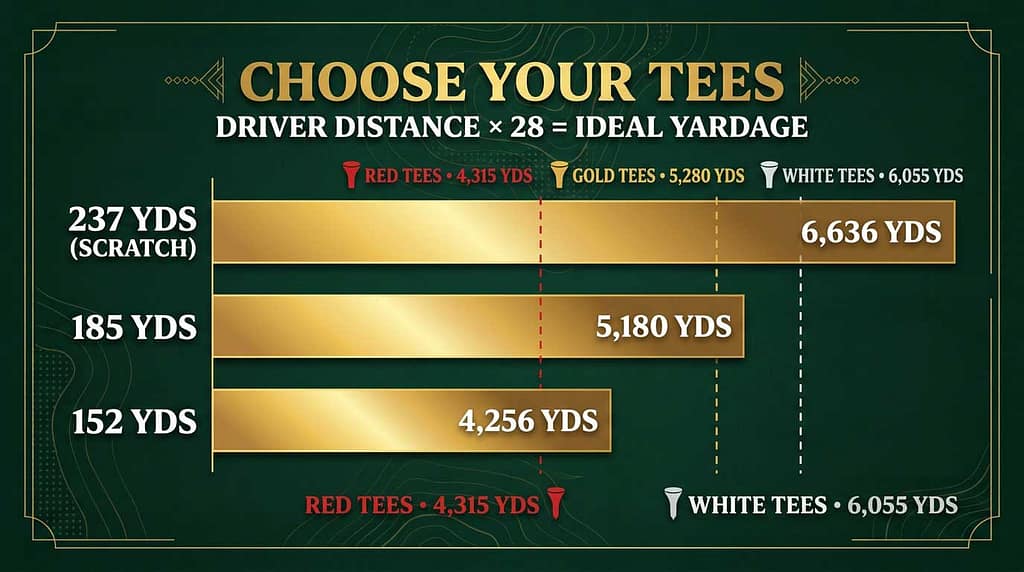
Scorecards love labels. Forward tees often carry names that sound like consolation prizes, so plenty of women golfers skip them. Numbers tell a friendlier story. Golf Course Intel’s Lady Golfer Analytics shows a 15-handicap woman averaging 185 yards off the tee, while a 30-handicap player averages 152.
Figure out where you should be playing easily: Multiply your average drive by 28 (the formula widely recognized as a solid benchmark) to land on a target course length. Drives of 152 and 185 yards point to roughly 4,256 and 5,180 yards of course.
Choosing yours gets easier with the tee box strategy post. Any scorecard missing a set in that range leaves a big crowd of golfers guessing.
Ratings That Keep Scores Honest
Every tee set earns its own course rating and slope rating, and those numbers keep handicaps trustworthy.
The same blueprint shows the pattern nicely, with red tees at a slope of 110 and black tees at 137. A missing or outdated rating on a forward set makes a posted score harder to trust, which matters when handicaps travel from course to course.
Tee Times Feel Like a Lottery

Record rounds are landing on fewer properties.
The NGF reports all-time high rounds played with roughly 2,000 fewer facilities than during the last participation peak two decades ago. Crowded tee sheets follow, and a Saturday 7:10 slot can feel like a lottery ticket with a cart path.
Twilight windows, popular with anyone squeezing golf around a busy day, vanish quickly. Protected times for women’s leagues and beginner clinics turn curious visitors into loyal regulars.
What Women Golfers Pay
Public green fees have climbed in step with inflation, according to the NGF. Cart fees and range balls stack up fast, and newcomers need several rounds before golf feels fun.
Perhaps that explains why women make up 43% of golfers who play only away from the course. Off-course venues make an inviting first step. Smart pricing on twilight rounds and nine-hole loops can turn those visitors into repeat customers.
Where the Welcoming Courses Hide
Geography plays favorites. Many golfers play close to home or work, so a single well-run muni can serve an entire zip code. Once that muni closes or raises prices, the next choice may sit half an hour away. Smaller towns can feel this most. Searching for nine-hole layouts and par-3 courses with forward tees often turns up the friendliest first-round settings.
Conditions Set the Mood
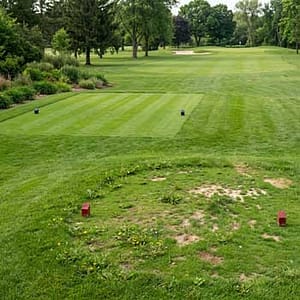
Well-kept forward tee boxes and tidy bunkers make any round better.
Some layouts pour maintenance dollars into the back tees and let the front boxes grow shaggy. Sloping, patchy turf makes a forward tee feel like an afterthought. Even a modest budget can fix that with regular mowing and a few fresh tee markers.
Course conditioning sends a quiet message about who matters, and every golfer reads it by the second hole.
The Locker Room Question
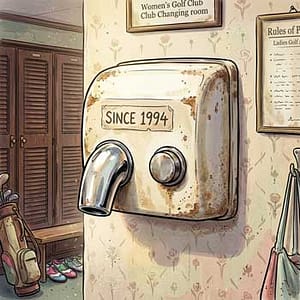
Clubhouses built decades ago often reflect the golfer of that era.
Picture one small changing room with a single mirror and a hand dryer from 1994.
A comfortable place to change shoes and freshen up sounds basic, yet it decides whether a golfer books lunch after the round or heads straight for the parking lot.
Adding a clean, private space with a bench and a few hooks sends a warm signal for a small investment.
A Warm Welcome at the Pro Shop
Attitude counts as much as architecture. A friendly greeting in the pro shop and a starter who explains the tee options sets the tone for the whole day.
Pace of play matters, so a marshal who gently nudges slow groups helps everybody finish with a smile. Newcomers can prepare with our Ultimate Beginner Golf Strategy Guide before their first round.
Small Fixes With Big Payoffs
Courses can start by posting yardage guidance for forward tees and refreshing changing rooms. Asking for tees that fit and sharing friendly feedback with the pro shop gives golfers a voice.
A good strategy guide shows how much better golf feels when every hole has a plan for your yardage. Our Brabazon at The Belfry Course Guide shares strategic tips for an iconic layout.
Listening courses collect loyal customers, and golfers who speak up help the game grow.
Your Move
With 8 million women golfers already on the course, demand has spoken loudly.
Tell us in the short poll below what your home course does right, and share this with the foursome that deserves better tees.
If These Articles Help,
Running Golf Course Intel takes real time, real effort, and – yep – real golf balls. If you’ve enjoyed the guides, the strategy breakdowns, or the myth‑busting articles, hitting that Buy Us Golf Balls button is the easiest way to help keep the site online and the content flowing. Every donation, big or small, genuinely fuels the next round of smarter golf insights.
Thanks for helping us keep this thing rolling!





0 Comments