
How to Play a Golf Course For The First Time
Stepping onto the first tee of an unfamiliar property brings a unique mix of excitement and anticipation.
I recently played a new-to-me layout at Stoney Creek, eagerly anticipating a phenomenal round of golf. My final scorecard looked wildly different than the pristine sub-80 round I envisioned during the drive over: The fairways played tighter than the satellite images suggested. Greens featured subtle breaks my eyes completely missed.
Golf always presents unique puzzles. Navigating an entirely unseen track tests your patience alongside your physical swing.
Here are some practical, positive strategies for tackling an unfamiliar layout with absolute confidence:
Select the Right Starting Point

Choosing your tee box sets the tone for the entire day. Golfers frequently default to their usual total yardage from their home club.
A highly effective strategy involves evaluating the specific course rating and slope before putting your peg in the ground. Moving forward one set of tees provides a comfortable buffer while you learn the landing zones: You will enjoy hitting shorter approach shots into unknown green complexes.
Remember: Course rating dictates the expected score for a scratch golfer. Slope measures the difficulty for a bogey golfer.
Factoring these numbers into your choice ensures the challenge perfectly matches your current skill level. You give yourself the best opportunity to score well by aligning the yardage with your realistic driving distances.
Anchor Your Round with Familiar Equipment
Equipment choices matter significantly when facing new visual tests. Packing a reliable golf ball helps anchor your routine amid unfamiliar surroundings.
I personally rely on the TaylorMade Tour Response Stripe because the visual alignment aid provides immediate feedback on my tee shot aim and putting stroke. Seeing that thick stripe spin end-over-end builds confidence on tricky courses. Bring a consistent model you trust entirely. Playing a familiar ball removes one variable from the equation while you calculate new yardages.
Relying on trusted clubs off the tee also keeps the ball in play. Hitting a reliable wood or hybrid off the tee on a blind dogleg easily navigates the corner while keeping you safe from hidden hazards. Using equipment you know intimately brings a sense of comfort to an otherwise foreign environment.
Map Out Blind Tee Shots

Many classic designs feature elevation changes obscuring the fairway. Local knowledge usually dictates aiming at a specific tree or distant bunker.
Lacking that experience, you must rely on technology and smart course management. Using GPS apps or a dedicated rangefinder (or a GCI Course Strategist guide!) maps the unseen landing areas beautifully. Aiming for the widest section of the fairway yields the best angles for your subsequent shots.
We detailed this exact conservative approach in our Southern Pines Course Guide, highlighting how conservative targets off the tee produce better scoring opportunities. Trust your yardage book completely and commit fully to the target line you select.
Read Unfamiliar Greens Successfully
Putting surfaces vary wildly from one region to another. Finding the lowest point on the green as you walk up from the fairway offers an immediate read on the primary break.
Water always flows downhill, so noticing the overall drainage patterns gives you an excellent baseline for every putt. Pay close attention to the grain of the grass if you are playing in warmer climates. Firmly commit to your read and focus entirely on speed control. Leaving your first putt close guarantees a stress-free par or bogey.
Executing your approach shot well sets up those easier putts. Trusting a specific, dialed-in club (such as your favorite wedge) allows you to attack pins with a consistent trajectory you can always count on. Landing the ball in the correct tier of the green limits three-putts entirely.
Study the Layout Before You Arrive
Preparation begins long before you arrive at the clubhouse bag drop.
Reviewing the scorecard online helps you formulate a basic plan of attack. Identifying the par fives early helps you plan scoring opportunities.
Developing a strategy report ahead of time gives you a massive advantage over the golf course.
I regularly build these analytical blueprints for GCI, similar to the ones featured in Hannah’s Pawley’s Plantation Strategy Guide, to map out the most forgiving routes to the pin. Having a plan reduces mid-round confusion significantly.
Manage Nervousness and Uncertainty
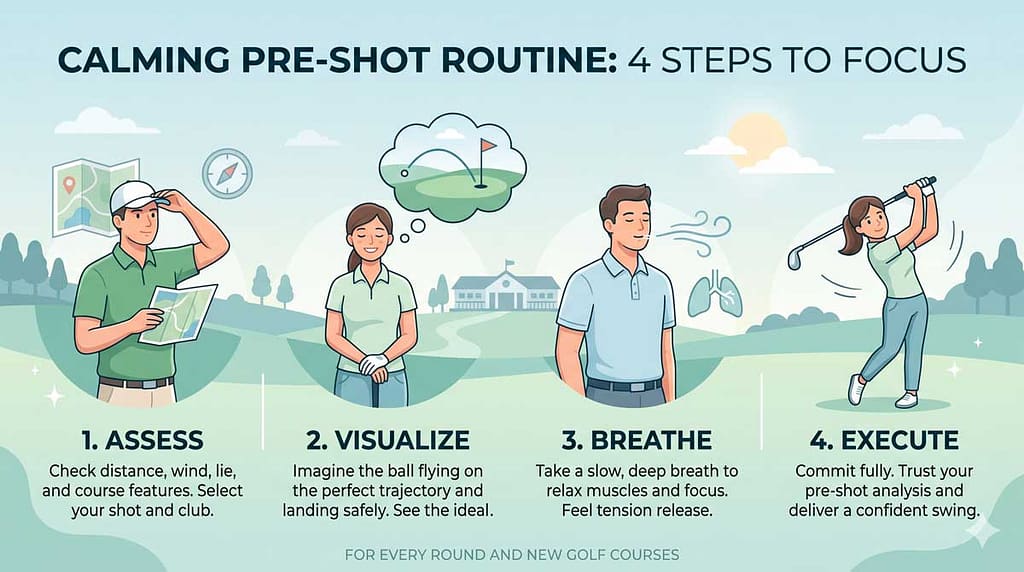
Anxiety naturally creeps in when you face a challenging carry over water you have never seen before. Relying on a consistent pre-shot routine calms the mind effectively.
Take stock of the situation and visualize a successful shot landing safely on the short grass. Taking a deep breath before stepping up to the ball regulates your heart rate. Maintaining a relaxed grip pressure allows the clubhead to release naturally through the impact zone. Keeping your mind focused on the present moment keeps you dialed in on the current swing.
Building a structured routine translates perfectly to any venue you visit.
Embrace the Learning Experience!
Every layout requires a few rounds to truly understand its nuances.
Give yourself grace if you miss a fairway or misjudge a bunker’s depth. Viewing the round as a data-gathering mission changes your perspective entirely. Take mental notes on where the severe slopes are located for your next visit.
Enjoy the beautiful scenery and appreciate the architectural details the designer incorporated!
Conquering an unfamiliar layout demands patience and intelligent strategy. Preparation combined with a positive mindset guarantees an enjoyable walk on any property.
If These Articles Help,
Running Golf Course Intel takes real time, real effort, and – yep – real golf balls. If you’ve enjoyed the guides, the strategy breakdowns, or the myth‑busting articles, hitting that Buy Us Golf Balls button is the easiest way to help keep the site online and the content flowing. Every donation, big or small, genuinely fuels the next round of smarter golf insights.
Thanks for helping us keep this thing rolling!
Golf Course Owners and Managers:
Give your patrons a competitive edge at their favorite local track! Request a bespoke, highly detailed guide for your course to share in your pro shop or online, with members, guests, and the public.
Contact us for a quote: