
Apply Process Improvement Logic to Your Next Weekend Round
Summary
Traditional golf metrics often fail to identify specific performance bottlenecks. Tracking granular data, such as first putt distance and pin-high percentage, offers a more accurate assessment of a player’s skill. These advanced statistics reveal how approach shots and depth control directly influence scoring potential and short-game pressure.
Analyzing situational outcomes like recovery rates and double bogey avoidance helps golfers develop better course management strategies. By focusing on metrics like bounce-back percentages and ball retention, players can identify structural breakdowns in their game. This data-driven approach facilitates targeted practice and more consistent scoring on the course.
Golf has a funny way of behaving like a full‑blown operations system. When you’ve spent years in process improvement, you start to see that better golf isn’t just about talent, it’s about measuring the right things.
Playing Stoney Creek last week made it obvious that traditional scorecards barely scratch the surface. Fairway percentages don’t tell you how severe your misses were, or why certain holes keep blowing up your round.
To truly spot scoring bottlenecks, you need richer data. That’s where these unexpected golf stats come in: they’re granular, eye‑opening metrics that reveal exactly where small tweaks create big gains. These eleven stats will change how you analyze your weekend rounds and you actionable insights to play smarter and score lower.

1. First Putt Distance
- What it tracks: Recording the exact length of your initial putt provides a crucial link between approach play and green success.
- Why it matters: Evaluating your first putt distance reveals the actual stress placed on your short game. A forty-foot birdie attempt practically ensures high scores on the green.
- How to use: Precise approach shots naturally remove immense pressure from your flatstick. Keeping your first putt inside twenty feet guarantees much easier pars.
2. Pin-High Percentage (Depth Control)
- What it tracks: A detailed look at your depth control tells a fascinating story about strike efficiency.
- Why it matters: A left or right miss often relates directly to swing path mechanics. Consistent short misses indicate you might be calculating yardages based on your absolute best contact.
- How to use: Honest assessments of your average strike distance with those irons ensure your approaches finish level with the flagstick. Clubbing up usually solves distance gaps instantly.
3. Up-and-Down Conversion by Specific Club
- What it tracks: A breakdown of your scrambling success by the exact wedge or iron used provides massive clarity.
- Why it matters: Your short game consists of multiple distinct skills and tools. Knowing your most reliable weapon builds unshakeable confidence when standing over tricky lies around the green.
- How to use: A simple bump-and-run with an approach wedge often yields a much tighter dispersion than flying a lob wedge to the hole. Rely on the club that produces the highest statistical success.

4. The “Two-Chip” Defect Rate
- What it tracks: A log of how often you need multiple chips to reach the putting surface from inside fifty yards.
- Why it matters: Applying process improvement principles shows that multiple chips act as a critical defect. Compounding errors destroy system efficiency and inflate your final score rapidly.
- How to use: A review of the root cause highlights areas for practice. Better club selection and mechanical drills will instantly remove these big numbers from your scorecard.
5. Putts Made by 3-Foot Increments
- What it tracks: Segmented conversions into zero-to-three, three-to-six, and six-to-nine-foot buckets.
- Why it matters: Broad putting averages get heavily skewed by the total number of greens hit in regulation. Missing the green leaves shorter par attempts that artificially lower your overall putt count.
- How to use: Automated confidence in that critical three-to-six-foot range completely transforms your scoring potential. Dedicate your practice green time entirely to this specific radius.
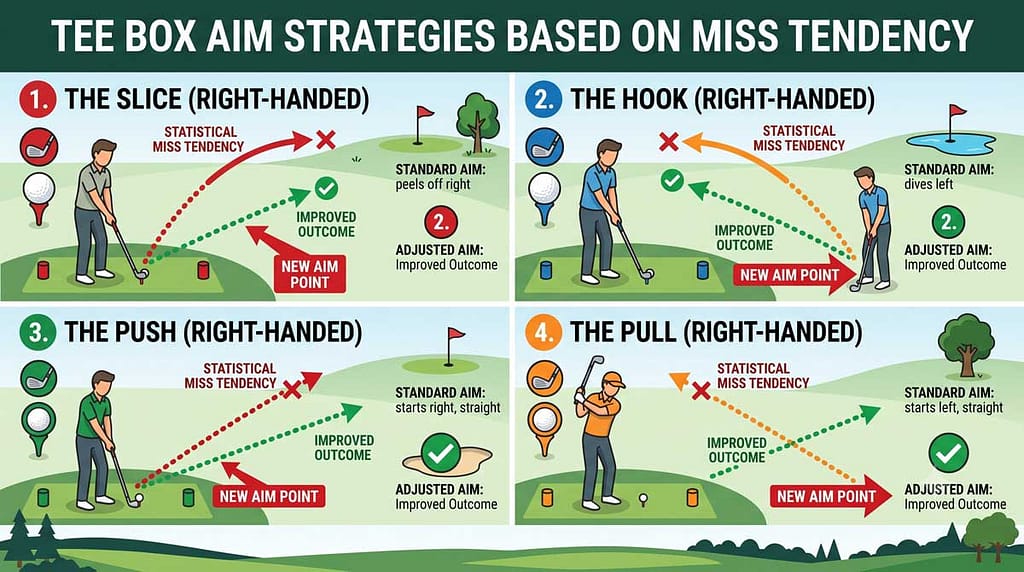
6. Tee Shot Directional Tendency
- What it tracks: A map of whether your drives favor the left side, right side, or fall short.
- Why it matters: Accurate knowledge of your reliable statistical miss completely transforms your course strategy. Highly proactive risk management keeps you out of the trees and in the short grass.
- How to use: The published course guides on GolfCourseIntel.com emphasize this exact concept heavily. Preparation for a tricky layout becomes much easier when you confidently bias your aim. A trusty 3-wood or 5-wood keeps you perfectly positioned on those tight tee boxes.
7. Bounce-Back Percentage
- What it tracks: A precise calculation of how often you record a par or better immediately following a bogey.
- Why it matters: Mental resilience plays a massive role in shooting consistently lower scores. Quantifying your emotional control helps identify moments where a conservative strategy is the smartest possible move.
- How to use: Composure after a bad hole prevents momentum shifts from ruining a great afternoon. Take a deep breath, aim for the center of the green, and secure a stress-free par.
8. Par 3 Scoring Average
- What it tracks: Your average score strictly on the shortest holes on the course.
- Why it matters: Par threes test your pure approach skills from a perfect lie. A teed surface removes the variability of uneven fairway grass to give a clear picture of your ball striking.
- How to use: Rehearsing with a hybrid off the practice tee builds the necessary precision for those intimidating 185-yard layouts. Track the specific yardages that cause the most trouble and practice them relentlessly.
9. Holes Per Golf Ball
- What it tracks: The average number of holes you complete before losing a ball to a hazard.
- Why it matters: Ball retention remains the absolute fastest way to drop your handicap. Penalty strokes act as massive speed bumps during a good round.
- How to use: Smart targets toward the geometric center of the map keep your favorite balls safely in your bag. A conservative approach to water hazards works wonders for your scorecard.
10. GIR When Missing the Fairway
- What it tracks: Your ability to secure a green in regulation after playing from the rough or fairway bunkers.
- Why it matters: Recovery from the rough requires distinct and measurable skills. This specific recovery rate highlights the actual severity of your tee shot errors.
- How to use: A simple lay-up serves as the statistically smarter choice if your success rate from thick grass remains historically low. Pitch back to the fairway and rely on your wedge game.
11. Net Double Bogey Avoidance
- What it tracks: The percentage of holes you complete without carding a double bogey or worse.
- Why it matters: Low handicappers focus intensely on eliminating blow-up holes. A clean scorecard without a single double bogey guarantees a highly respectable final score.
- How to use: Every big number represents a structural breakdown that warrants a review. Future rounds benefit tremendously from an analytical approach to risk assessment.
Adding these detailed metrics to your weekend routine provides a crystal-clear roadmap for targeted practice. Small tweaks in course management naturally lead to more enjoyable afternoons on the links.
Grab your clubs, head to the first tee, and start logging the numbers that truly matter!
If These Articles Help,
Running Golf Course Intel takes real time, real effort, and – yep – real golf balls. If you’ve enjoyed the guides, the strategy breakdowns, or the myth‑busting articles, hitting that Buy Us Golf Balls button is the easiest way to help keep the site online and the content flowing. Every donation, big or small, genuinely fuels the next round of smarter golf insights.
Thanks for helping us keep this thing rolling!