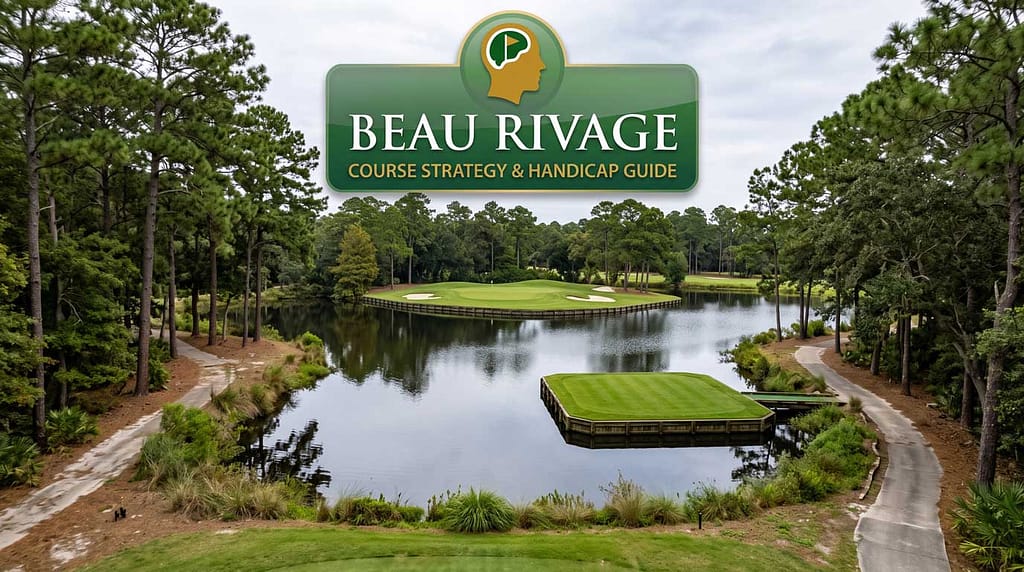
Golf at Beau Rivage: With Strategies for Every Handicap
Tucked just south of historic Wilmington, North Carolina, Beau Rivage Golf & Resort shatters every expectation golfers hold about coastal golf. Most players heading toward the Atlantic anticipate flat fairways, salt marsh carries, and predictable sea-level lies. Beau Rivage completely upends that script.
Featuring sweeping hills, towering Carolina pines, and lightning-fast greens, this layout blends inland shotmaking with maritime breezes. Whether you are gunning to break 80 or aiming for your personal best, our comprehensive Beau Rivage golf course strategy breaks down how to navigate every challenge.
A Quick Trip Through Beau Rivage History
Beau Rivage officially welcomed its first players on May 6, 1988. Architect Joe Gessner and developer Eddie Lewis carved the championship layout out of mature, long-needle pine forests.
What makes the design truly extraordinary is its elevation: the property climbs up to 75 feet above sea level. That stands as the highest natural elevation point in Wilmington!
Gessner used these natural rolling contours to build a shot-maker’s paradise, creating an integrated “Stay and Play” resort that pairs classic Southern hospitality with an architectural gem.
Finding Your Best Fit: Proper Tee Selection
Gessner did not design Beau Rivage to test brute force. Stretching just 6,534 yards from the tips, the course defends itself through narrow corridors, strategic doglegs, and slick TifEagle Bermudagrass greens.
Selecting the right tee box is vital. A proven framework is matching your tee deck by multiplying average driver distance by 28:
- Low-Handicap Men (Index ~2.0, 260-yd driver): Blue Tees (6,534 yards).
- Mid-Handicap Men (Index ~14.0, 220-yd driver): White Tees (6,056 yards).
- High-Handicap Men (Index ~24.0, 200-yd driver): Gold Tees (5,570 yards).
- Low-Handicap Women (Index ~4.0, 200-yd driver): Gold Tees (5,570 yards).
- Mid-Handicap Women (Index ~18.0, 175-yd driver): Green Tees (4,885 yards).
- High-Handicap Women (Index ~28.0, 150-yd driver): Red Tees (4,493 yards).
The Mid-Handicap Blueprint
For mid-handicappers, moving forward to the White tees (or Green tees for women) is the key to enjoying the round.
Choosing tees beyond your comfortable carry distance turns forced carries and narrow landing areas into scorecard disasters. Playing the proper yardage lets you hit controlled mid-irons into greens rather than straining with fairway woods all day.
Coastal Winds, Bermudagrass, and Elevation
To master your round, keep these three course characteristics top of mind:

- Firm and Grainy TifEagle Greens: Unlike bentgrass, Bermudagrass features a distinct grain that follows the setting sun and pulls toward the Cape Fear River basin. Expect firm surfaces that reward crisp wedge shots with clean backspin.
- Heavy Coastal Wind: Wilmington’s afternoon sea breeze consistently whips between 10 and 25 knots. Dense pine canopies often mask wind speeds at ground level. Look up at the treetops to gauge true velocity before pulling a club.
- Low Walkability: With rolling ridges, long green-to-tee transitions, and coastal humidity, this is firmly a cart-mandatory layout. Beau Rivage’s fleet of modern GPS-equipped Club Cars help players preserve energy and track exact yardages.
Tactical Course Highlights: Conquering Key Holes
Here is how players across skill levels should approach several signature challenges at Beau Rivage:
Hole 4: “Winds Leap” (Par 3)
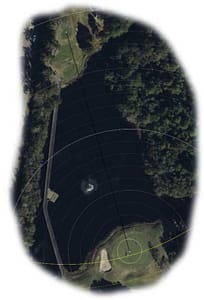
Beau Rivage’s signature test demands an intimidating 200-yard carry over a lake to an uncompromising peninsula green.
- Low Handicap: Club up for the wind above the tree line and take aim at center-right.
- Mid Handicap: Disregard any tucked pins! Aim straight at the dead center, take an extra club to eliminate water risk, and accept a two-putt par or bogey.
- High Handicap: Smooth tempo is crucial. Focus on solid contact to clear the water without over-swinging.
Hole 8: “Crazy Eight” (Par 4)
The number one handicap hole features a driving corridor pinched to a mere 17 paces wide, defended by nine greenside bunkers.
- Low Handicap: Requires a tour-caliber power fade into the bottleneck fairway.
- Mid Handicap: Leave driver in the bag. A controlled fairway wood or hybrid off the tee leaves an approach you can manage. Treat this hole like a short par 5: lay up short of the bunker complex and rely on your wedge to set up a clean putt.
- High Handicap: Play for pure position. Lay up safely to 100 yards and steer clear of the sand.
Hole 12: “Basin Drop” (Par 3)
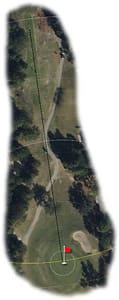
Perched 75 feet above sea level, this tee shot plunges into a natural amphitheater framed by nine sand traps and a protective center tree.
- Low Handicap: Factor the steep downhill drop by clubbing down one to two clubs, flying a piercing mid-iron past the branches.
- Mid Handicap: Trust your numbers. Club down, swing smooth, and favor the wide right side of the green away from the guarding tree.
- High Handicap: Find the largest opening between the front bunkers and focus on two-putting for a stress-free bogey.
Hole 18: “Aultor Bend” (Par 5)
A grand finishing dogleg right playing back toward the elevated plantation-style clubhouse.
- Low Handicap: Aggressive hitters can carry the corner bunker to set up a reachable eagle look.
- Mid Handicap: Play this strictly as a three-shot hole. Aim left-center off the tee to dodge the dense tree line on the right, lay up to 100 yards, and attack the pin with a full wedge.
- High Handicap: Work methodically around the dogleg, steer around the hazards, and soak in the clubhouse vista.
For more hole breakdowns and situational advice, check out our tactical guides at Buy Me A Coffee.
When to Attack: The Aggressive Strategy

Conservative play keeps big numbers off the card, but selective aggression can turn a good round into a great one:
- Short Par-4 Pin Hunting (Hole 3 & Hole 7): On short par-4s, aggressive players can take a high-launch driver or driving iron over tree lines to leave a short flip wedge.
- Cut the Corners on Par 5s (Hole 13 & Hole 18): Hole 13 offers an uphill ridge where a booming drive down the right side catches a steep slope, kicking balls into prime position for an eagle putt.
- Attack Back Pin Locations: When flags sit in back quadrants on tiered holes like 5 and 17, aggressively flying the ball to the upper shelf removes the threat of three-putting across tiers.
Realistic Scoring Benchmarks
Expected scores at Beau Rivage mirror discipline, risk management, and local knowledge:
- Low Handicappers (Target CH 4–7): Expected score: 75–78. Skilled players handle the elevation and hold firm greens, but tight corridors will usually cost a stroke or two.
- Mid Handicappers (Target CH 15–19): Expected score: 86–91. Avoiding penalty areas on holes 4, 11, and 16 while avoiding three-putts on false fronts keeps scores in the 80s.
- High Handicappers (Target CH 23–26): Expected score: 97–104. Taking conservative lines away from water and playing for simple bogeys will prevent runaway scorecards.
Remember: Beau Rivage rewards golfers who respect its contours and think one shot ahead.

Ready to Tee Off With Complete Confidence?
Grab the full, interactive Beau Rivage Course Strategy Guide & Caddie Book, available under a flexible “pay what you think is fair“ price tag!
If These Articles Help,
Running Golf Course Intel takes real time, real effort, and – yep – real golf balls. If you’ve enjoyed the guides, the strategy breakdowns, or the myth‑busting articles, hitting that Buy Us Golf Balls button is the easiest way to help keep the site online and the content flowing. Every donation, big or small, genuinely fuels the next round of smarter golf insights.
Thanks for helping us keep this thing rolling!






0 Comments