Langston Golf Course Strategy Guide: History, Holes & Pro Tips
Playing golf in Washington, D.C., carries a uniquely electric energy. You constantly feel the pulse of the US capital city echoing through the mature trees and open parklands.
Langston Golf Course in northeast Washington, DC perfectly captures this magical atmosphere. Situated quietly along the banks of the Anacostia River, this 18-hole municipal layout brings together beautiful topography, a welcoming community, and a legacy that forever changed American sports.
Whether you are a scratch golfer looking for a fresh challenge or a weekend warrior hoping to sink a few putts with friends, this Langston Golf Course strategy guide will prepare you for a phenomenal round. We love diving deep into course architecture and local lore, and Langston delivers a spectacular experience on both fronts.

A Tapestry of Resilience and Community
Stepping onto the first tee at Langston connects you directly to a monumental civil rights triumph. The facility opened to the public in 1939 as a dedicated space for African American golfers. Prior to its construction, Black players faced severe segregationist policies restricting their access to public recreational facilities. Community leaders, visionary architects, and local activists worked tirelessly to secure a permanent home for Black golfers in the District of Columbia.
The original nine holes were carved into reclaimed land along Kingman Lake by the Works Progress Administration (WPA). Early golfers endured rough turf conditions and chronic underfunding, yet they built a vibrantly thriving community.
Decades of relentless advocacy eventually led to the desegregation of all Washington public courses in 1955. At the same time, architects William and David Gordon expanded Langston into a complete 18-hole championship layout. The original front nine holds such immense cultural value that it was proudly added to the National Register of Historic Places in 1991.
Honoring the Trailblazers: The Hole Name Project
The National Links Trust recently launched a brilliant initiative to celebrate the trailblazers of Black golf. They named each of the 18 holes at Langston after a pioneer who advanced the game. You get a profound sense of history as you make your way around the course. Here are some of the incredible biographies on the tee markers:

- John Shippen (Hole 1): The opening hole celebrates the first American-born golf professional. Shippen played in the 1896 US Open at Shinnecock Hills at just 16 years old. He navigated severe racial prejudice to secure a fifth-place finish, cementing his status as a legendary competitor.
- Helen Webb Harris (Hole 2): Harris founded the Wake Robin Golf Club in her living room in 1937. Her organization remains the oldest African American women’s golf club in the United States. Harris was a fierce advocate for equal access and a highly talented player in her own right.
- Charlie Sifford (Hole 11): Sifford broke the PGA Tour’s color barrier in 1961. He won multiple professional events and received the Presidential Medal of Freedom in 2014. Sifford was a regular visitor to Langston’s fairways throughout his life.
- Lee Elder (Hole 13): Elder achieved international fame as the first Black golfer to play in the Masters Tournament in 1975. Mr. Elder also managed Langston Golf Course in the late 1970s, sharing his expertise and passion with the local community.
Two Distinct Nines: Course Routing and Topography
Langston functions beautifully as a tale of two distinct environments. The front nine features classic parkland architecture with rolling hills, sweeping doglegs, and heavily wooded corridors. You will navigate subtle elevation changes and firm turf conditions that reward accuracy off the tee.
Crossing over to the back nine introduces an entirely different aesthetic. Holes 10 through 14 traverse Kingman Island, immersing you in a stunning tidal wetland ecosystem. You will negotiate tricky breezes rolling off the Anacostia River and softer landing zones. Wildlife sightings are abundant here; players frequently spot groundhogs, elegant foxes, and majestic bald eagles soaring overhead.
Hole-by-Hole Strategy and Highlights
Every good Langston Golf Course guide requires actionable playing tips. The layout measures 6,652 yards from the blue tees, presenting a fair and rigorous test of your course management skills. Here is a closer look at a few standout holes to help you secure a great score.
Hole 3 (Joseph Bartholomew) – Par 5, 508 Yards
The number one handicap hole demands total focus. The fairway slopes heavily down to the right toward a massive wash area. Favor the left side with a controlled fairway wood off the tee. Lay up conservatively short of the creek to set up a clean 100-yard wedge shot. The small, elevated putting surface requires precision to hold the green.
Hole 9 (Anna Mae Robinson) – Par 4, 400 Yards
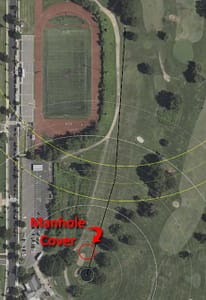
This dogleg right requires a drawing tee shot to find the optimal landing zone. The approach shot introduces a truly unique municipal feature: a raised manhole cover located directly in the front apron of the green. Local rules grant free relief from this immovable obstruction. Fly your approach shot all the way onto the putting surface to ensure a smooth, predictable bounce.
Hole 10 (Ethel Funches) – Par 5, 538 Yards
Get ready for a massive visual thrill. The back tees require a forced carry of roughly 200 yards entirely over Kingman Lake just to reach the fairway. Aim slightly right to give yourself a wide margin of safety from the water hugging the left side. A smart mid-iron layup will leave you in a perfect position to attack the pin with your third shot.
Hole 13 (Lee Elder) – Par 3, 175 Yards
Welcome to the signature hole of Langston Golf Course. You must launch a 175-yard tee shot directly over the northern mouth of the lake. The wind generally swirls in this open expanse, so club up to guarantee your ball clears the hazard. Once safely across, you get to enjoy a gorgeous walk over the wooden footbridge leading to the green.
Hole 18 (Tiger Woods) – Par 4, 383 Yards
The finishing hole provides a magnificent conclusion to your round. Pointing dead south toward the clubhouse, this straight par-4 gives you an opportunity to swing freely. Keep your drive in the left-center of the fairway to bypass the right fairway bunker. Thread your approach between the dual greenside sand traps, and you will walk away with a highly satisfying par.
A Few Course Notes
Langston offers wonderful amenities to complement your round. Arrive early to warm up at the expansive driving range, which features Toptracer technology to dial in your yardages.
Langston features classic bentgrass greens that roll true and fast during the cooler spring and autumn months. The fairways utilize Bermuda grass, creating an excellent surface that truly shines in the humid D.C. summers. Remember to utilize the black-and-white striped directional poles located precisely 150 yards from the greens; they serve as invaluable visual aids on the blind approach shots.
After sinking your final putt, make sure to visit Melva’s Kitchen inside the clubhouse. They serve an absolutely legendary all-day breakfast that perfectly caps off a morning on the links.
Langston Golf Course stands as a triumphant celebration of the game. You will leave with a deep appreciation for the architecture, the welcoming staff, and the legendary figures who paved the way for modern golf. Book your tee time, embrace the layout, and enjoy every single swing!
Want the Complete Strategy Guide / Caddie Book?

We are thrilled to announce that our brand-new, comprehensive 18-hole strategy guide and caddie book, A Blueprint for Conquering Langston Golf Course, is officially available for download!
Packed with detailed yardages, hole-by-hole shot strategies, hazard notes, and tee recommendations tailored for every skill level, this guide is designed to help you shave strokes off your next round on this historic D.C. gem.
To celebrate the launch, we’ve made this digital booklet available on a “pay what you think is fair” basis in our Buy Me A Coffee shop. Whether you want to grab it for a few bucks or buy us a round, your support helps us keep creating these deep-dive course guides.
Grab your copy now at Buy Me A Coffee
and play your next round with the confidence of a seasoned local!
If These Articles Help,
Running Golf Course Intel takes real time, real effort, and – yep – real golf balls. If you’ve enjoyed the guides, the strategy breakdowns, or the myth‑busting articles, hitting that Buy Us Golf Balls button is the easiest way to help keep the site online and the content flowing. Every donation, big or small, genuinely fuels the next round of smarter golf insights.
Thanks for helping us keep this thing rolling!






0 Comments